Make an Impact Today!


NEW!
click here for
ORCHIDS electronic
edition now online

(requires member log in)

 Image
 May 2013
Bulb-o-licious Issue!
Awarded Hybrids
Bulbophyllum Culture
plus
Yellow Cattleyas w/ Red Spots!
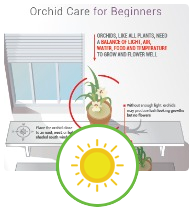
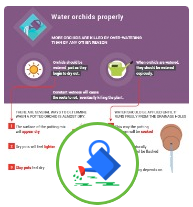
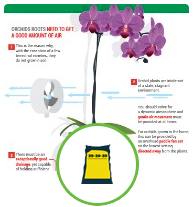
Orchid Growing, it's a Balancing Act
and more!


F.Y.I...

Are you an AOS member logging into our new website for the first time? Learn how to set your password right here .

º Update:
   Judging Legal and Illegal Plants

º Update Vista-Win7 settings for best
   AQ Plus performance

º Get answers to your questions
   at the AOS Forum.


Orchid Hybrid Trivia

The total number of grex names in the register is currently 154,660 (as of now). This figure increases daily. Each year The International Orchid Register adds between 3000-4000 new hybrids. The most popular genera for hybrids are:

   Phalaenopsis — 31,382
   Paphiopedilum — 23,871
   Cymbidium — 14,688
   Dendrobium — 11,910

So far there are about 2349 hybrid generic names, but not all of these are in use.
There are about 5,600 species involved in hybridization.


Raise $$ for the AOS -
it doesn't cost you a dime!
click here
GoodSearch: You Search...We Give!


Search The AOS, find the answer to all questions orchid!

Loading


Sharing Your Love of Orchids with Kids

by Sandy Stubbings, AOS Education Committee


What can the AOS do to interest the youth of today in orchids? That is the question that has been consistently addressed by the Education Committee of the AOS. I would like to tell you about two resulting projects in the hope that members and affiliates will pick up on them. One is a Girl Scout Interest Project and Patch. The other is a set of activities that children can do at shows.

Girl Scout Interest Project

For any orchid lovers who are involved in Girl Scouting, we have developed an Interest Project and iron–on Patch. Both are available for your use by contacting Sandy at sstubbings@comcast.net. Since we are just beginning to explore possibilities, we are eager to work with Scout personnel to modify and/or develop the requirements for issuing the patch.

Several leaders who have contacted us have had very good project ideas for girls to earn the patch. Many requirements of the American Orchid Society Interest project can be fulfilled at an orchid show. One excellent idea is to have Girl Scouts help with local shows to earn patches.

Perhaps you can combine both the Girl Scout and the Kids’ Corner projects by having Girl Scouts volunteer to supervise the "Kids’ Corner" at your shows.

Kids' Corner

We hope affiliated clubs will copy these activities, eventually creating their own "Kids' Corner". To that end, I will be providing an article each month that will give instructions for making/setting up an activity that can become part of a Kids’ Corner. The Houston Orchid Society and SWROGA have successfully pioneered such a table in 2012 and 2013 shows so all activities are tested and proven successful.

This month I will begin with an overview of the activities we included in our table and I will give instructions for constructing an activity for the Corner each successive month. Please feel free to use these ideas in your own planning.

Our goals included promoting youthful interest in orchids, involving children in the show more directly, providing educational opportunities and rewarding children...

The Houston Orchid Society created a "Photo Panel" to stand at the Corner and catch people’s attention. The Kids' Corner consisted of a table of...

Continue reading Kids' Orchid Activities...


Last year we published our third annual magazine supplement, Cycnoches, Species and Hybrids, written by George Carr. Once again it was a huge success and we received many letters of praise. The 40-page, separately bound magazine became a "13th issue" for volume number 81 and mailed with the October issue of Orchids. We are especially pleased to report that most of the cost of producing the supplement was underwritten by small donations from the membership of the AOS. This spirit of cooperation enforced the power behind the concept of micropayments.

For 2013, we have an excellent topic that is sure to be of interest to orchid growers. We are working to continue improving the overall quality of this annual publication to make it a valued addition to your library. This year the supplement will mail with the October issue of Orchids and once again we appeal to the membership to make a small donation to help underwrite the cost of production.

If each member of the AOS donates merely $2.00...two bucks...we will have enough to publish this special 32-page supplement and cover the increased cost of mailing with the regularly scheduled magazine. Two dollars is not even the cost of a cup of coffee.

Make an Impact Today!
Select "Annual ORCHIDS Supplement" from the drop-down box under Donation Type
or call the AOS at (305) 740-2010 .
Donations over $50 will be acknowledged in the magazine.


Book Review:
Orchids of French Guiana

Dariusz L. Szlachetko, Yvonne Veyret, Joanna Mytnik-Ejsmont, Magdalena Sawicka, Piotr Rutkowski and Przemyslaw Baranow. 2012. 653 pages. Hardcover. 877 color plates, 589 figures, 105 keys. Ruggell, Liechtenstein: A.R.G. Gantner. Distributor: Koeltz Scientific Books, koeltz.com. ISBN 978-3-905997-02-6. €172.00 Euro, US $237.36.

This beautiful volume covers 410 species in 131 genera of orchids found in French Guiana (Guyane Francaise), an overseas department of France. The book is generously illustrated with color plates and high-quality line drawings. The book starts with a brief introduction to French Guiana, including the geomorphology, relief, hydrology, climate and flora. The content is arranged by family, subfamily, tribe and subtribe placed in taxonomic order (Szlachetko 1995 with later changes by Szlachetko and Rutkowski 2000, Szlachetko and Margonska 2002, Szlachetko 2003, and Szlachetko and Mytnik-Ejsmont 2009). By including order Orchidales Raf., the classification of the book covers all the taxa typically considered part of Orchidaceae. Every species’ account contains the Latin name, authors’ surname(s) abbreviation, citation, synonymy, taxonomic description, ecology, distribution and list of exsiccateexamined (herbarium specimens). The dichotomous keys for taxa placed at the family, genera, tribe, subtribe and species levels make it easy to navigate for plant determination (identification). There is a glossary of botanical terms to assist the uninitiated with use of the keys. The index of exsiccate (representative specimens) by collector and the index of scientific names are helpful in quickly locating information. My one criticism of the book is there is no map of French Guiana included. A map could have easily been included on the blank front and back endpapers.

Although the nomenclature used in this excellent treatment may differ from the World Checklist of Selected Plant Families, this book is a valuable tool to identify the orchids of French Guiana. Whether a professional scientist or avid hobbyist you will not be disappointed. This book will make a valuable addition to any orchid library.

Wesley E. Higgins, PhD, is a member of the AOS Publications Committee and coordinates Nomenclature Notes for Orchids magazine. He is a member of adjunct graduate faculty, Florida Gulf Coast University, Fort Myers, Florida. (email wesley.higgins@comcast.net).


 Photo of the Week

Spiranthes romanzoffiana
This is another photo from Lake Ezliabeth, this time of one of our native orchids, the Hooded Ladies' Tresses, Spiranthese romanzoffiana. The braided appearance of the flower spikes is the reason for the name "Ladies' Tresses" and these flowers are also distinctly "hooded." The plant flowers late in the summer and there were an abundance of them at Lake Elizabeth this past summer, though I've been told that in other years they are hard to find.


Photo and text © Ron Hanko

Spiranthes romanzoffiana

Click photo to see larger version
Learn how to submit your own photos here!


buy orchids & supplies
ORCHID SOURCE DIRECTORY


  A D V E R T I S E   H E R E !  


Q&A

Non-flowering Doritaenopsis

I have a mature Doritaenopsis Dyak Pedito that produces a prodigious amount of keikis but few flowers. It grows under lights, is fertilized once per week and has many neighbors in the phalaenopsis family that bloom well. Any suggestions?  — P.J. Hatcher

read answer here


SEE WHAT'S HAPPENING
fan palm
FAIRCHILD TROPICAL BOTANIC GARDEN