

In my last article on this group (Culbertson 2024), I detailed a few species that I thought were critical to producing hybrids of Warczewiczella, Pescatoria, and Kefersteinia that would fulfill the following set of criteria:
1. Be miniature, or miniature-ish, 8–12 inches (20–30 cm) in height when plants are mature.
2. Be easy to grow, under shady intermediate conditions in mixed collections.
3. Be blue-flowered.
4. Have a strong and pleasant fragrance.
5. Have shapely flowers, full and round, and corresponding with AOS judging parameters.
6. Mature quickly, blooming within a few years of coming out of flasks.
7. Stay in flower all year long, without taking much time off between flowerings.
These goals represent a relatively difficult set of parameters for breeding. It is interesting and fruitful to discuss a few older hybrids within this alliance, as well as my first efforts to produce plants that meet these criteria. Results have varied, for sure.
HYBRIDS WITH WARCZEWICZELLA DISCOLOR The first set of historic and more current hybrids we can discuss are those that involve Warczewiczella discolor. If you remember, the previous article stated that my goals no longer involve using this species. There is strong evidence to support that statement historically, and even more now that I made the mistake of using it anyway. There are 27 registered hybrids involving this species, dating from Goodale Moir’s Warczatoria Painted Lady (× Pescatoria cerina) to my hybrid Kefericzella Peppercorn, with Kefericzella Ash Trees, registered in 2025. This species has been crossed with a very wide variety of other parents, including other Warczewiczella species, with pescatorias, with kefersteinias, and even with Chondrorhyncha, Galeottia, Zygopetalum, Huntleya and, rather unbelievably, Lycaste (Lycazella Joseph Arditti [Wcz. discolor × Lyc. aromatica], registered by Harold Koopowitz in 1981). Most of these crosses were not used to produce further hybrids.
Within this set of hybrids, just a few are pertinent to the above goals, and in those cases, Wcz. discolor has been used to miniaturize plants, increase blue color and make fragrant flowers that smell like black pepper. The first of them is Wcz. Moliere, the cross between Wcz. discolor and amazonica. I can see why this is an interesting idea: to get the large lip of Wcz. amazonica, but in the blue of Wcz. discolor. This hybrid, registered by Marcel Lecoufle, has been awarded by the AOS twice, with the best example ‘Cardrona’ AM/AOS awarded in 2006 to Steve Male at Fishing Creek Orchids. Although the color of the lip is indeed blue, and the lip is bigger, the form of the flowers is quite poor, threedimensional and not flat or full. This hybrid was used for further breeding in three additional hybrids; those hybrids seem incredibly interesting, such as Warczatoria Purple Blush (× Pes. coelestis), but no photographs of these greges exist, either in the awards records or otherwise.
[1] Warczewiczella Moliere ‘Cardrona’ AM/ AOS; exhibitor: Stephen and Geraldine Male.

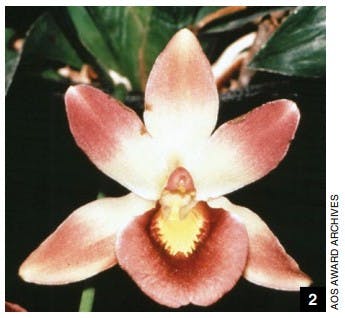
The second of these pertinent crosses is Wzt. Painted Lady, Wcz. discolor × Pes. cerina. This hybrid, although no longer extant and not terribly exciting in itself, is a very important parent. However, the reason behind its importance is more closely traced to Pescatoria lehmannii, which we will address later. The grex received an AD in 1992, more than 30 years after Moir registered it; although the photograph is admittedly dated, combined with the description, it provides important insights: the flowers are big, blue and attractive and produced on relatively small plants. More on this grex later.
[2] Warczatoria Painted Lady AD/AOS; exhibitor: Prairie Oak Farms.
Warczatoria Cosmo-Lehman, Wcz. discolor × Pes. lehmannii, likewise contains Pes. lehmannii, and should be a fine and beautiful hybrid. Few photographs of it exist; it was registered in 1997 by Kosukai in Japan. I reached out to Kosukai, and they sent some photographs from the late 1990s of plants flowering of this grex. While some do have a nice dark blue color, the form on each is reflexed and open, not full and round. Nevertheless, it was instructive to see some photographs of the cross, which was very helpful in determining the value of Wcz. discolor as a parent. Even with the magic of Pes. lehmannii, the hybrids are not full, round, or even regular. It has no registered offspring. And I think those are important problems: breeding with Wcz. discolor is just not very successful. Even Cochlezella Overbrook (× Cochleanthes aromatica), with its 10 offspring, the most frequently used Wcz. discolor hybrid, has no awards, and none of its offspring have awards either. It just does not seem like a successful parent.
[3] Warczatoria Cosmo-Lehman ‘k-133’; photograph courtesy of Kosukai Nursery.
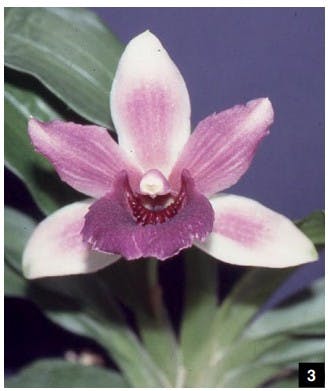
[4] Warczatoria Cosmo-Lehman ‘Nissho’ BM/JOGA; photograph courtesy of Kosukai Nursery.

[5] Warczatoria Cosmo-Lehman ‘Ocean Blue’; photograph courtesy of Kosukai Nursery
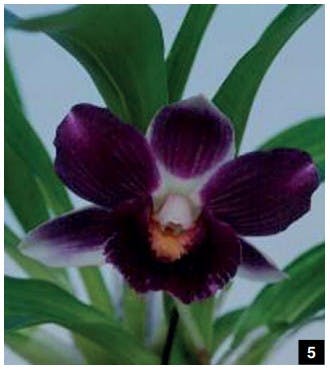
[6] Warczatoria Cosmo-Lehman ‘Otemoyama’; photograph courtesy of Kosukai Nursery.
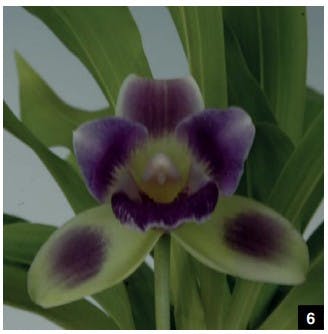
[7] Warczatoria Cosmo-Lehman ‘Purple Queen’ BM/JOGA; photograph courtesy of Kosukai Nursery
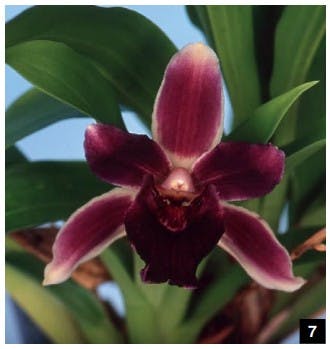
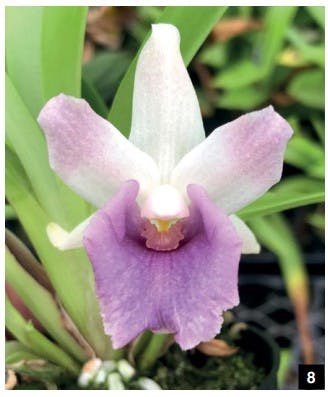
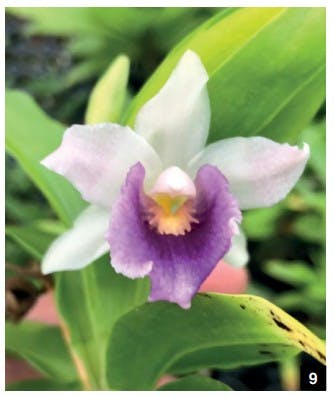
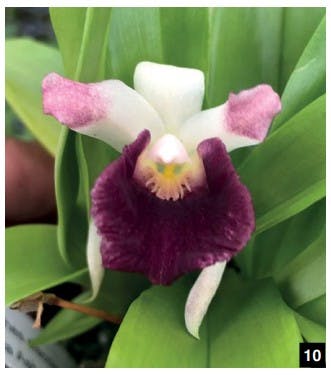
But, I tried anyway. I probably should not have done so, based on the results of previous hybrids with this species. I made two crosses with Wcz. discolor, and registered Kfz. Peppercorn and Warczatoria Fooled Me Twice, in 2025. Kefericzella Peppercorn, the cross between Kfz. Ash Trees and Wcz. discolor, was a cross I was excited about. Kefericzella Ash Trees is a very intriguing hybrid and is really the reason why I decided to breed plants in this genus, with the set of breeding goals above. This hybrid combines Kefersteinia tolimensis with Warczewiczella marginata. Although the flowers of this grex are not particularly attractive, my plant of Kfz. Ash Trees ‘Stunning’ has not been out of bloom for about four years now. The frequency of flowering and the ease of growth of this hybrid made me think I could breed everblooming, easy-to-grow plants in this alliance. By combining Kfz. Ash Trees with Wcz. discolor, I hoped the offspring would be miniature, blue and fragrant. They are: the plants are small, they flower a lot and they smell like black pepper (thus registering the grex as Kfz. Peppercorn). But they are very unattractive flowers in my opinion, with open, very three-dimensional flowers, not flat or full or round. I feel this hybrid went the opposite direction in terms of making award-winning and more “regular” flowers. They look very much like miniature Wcz. discolor flowers, and I am disappointed by the hybrid. Just as they began flowering, my cross of Wcz. discolor x Warczatoria Star Sapphire came out of flasks and went into plug trays. I was hopeful, since Wzt. Star Sapphire is a beautiful hybrid that contains Wcz. discolor already, that I would have the attractive, full, round flowers that I was looking for. I did not get that at all. They are likewise very three-dimensional, not round, and look very much like Wcz. discolor. So that is two bad crosses with this species, and I registered the hybrid as Wzt. Fool Me Twice so that I do not make the mistake of using it again. On to more fertile territory.
[8–10] Kefericzella Peppercorn cultivars.
H Y B R I D S W I T H P E S C AT O R I A LEHMANNII In the last installment of these articles, I mentioned that this species seems like magic in producing fine offspring. Indeed, that seems to be the case. Although only nine previous registrations with this species exist, they represent some of the absolute finest hybrids in this genus, fulfilling nearly all of the breeding goals listed above (but, importantly, not all of them). This species and its hybrids are easy to grow and fast to bloom, grow well in low light, intermediate temperatures and with lots of water, are blue and are full-flowered and round. They are not typically very fragrant, and while they do bloom frequently, they do not bloom continuously, even on larger plants. The biggest issue with this species and its hybrids, though, is that they are very large plants; more than 30 inches (0.75 m) tall when mature. Further work to miniaturize them is very important. Of the registered hybrids, a few stand out, including Wzt. Star Sapphire, mentioned above, the cross between Wct. Painted Lady and Pes. lehmannii. This grex was registered by Arnold Klehm in 1996. Arnie was kind enough to supply some divisions of his plants to me in the mid-2000s; I was incredibly pleased that he maintained these plants, because despite beautiful and awardable flowers, the grex seems to have disappeared from collections. It may be because the plants are large, but they are not as large as the pure Pescatoria group breeding. Warczatoria Star Sapphire flowers are exceptionally beautiful, with a rounded shape, and great blue color; my plants, now in overgrown 5-inch (12.5 cm) pots and bloom in flushes, six or so times each year. I have high hopes for this grex as a parent and have several hybrids with it in various stages of production.
[11] Warczatoria Star Sapphire; photographed by the author in October.

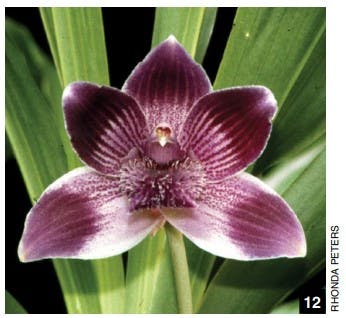
[12] Warczatoria Star Sapphire ‘Georgia’ AM/AOS; exhibitor: Gerald Steuben.
[13] Warczatoria Star Sapphire ‘E.F.G.’ AM/AOS; exhibitor: E.F.G. Orchids.

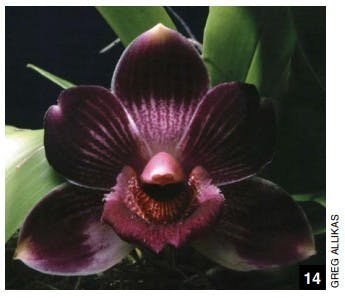
[14] Warczatoria Star Sapphire ‘Star of Miami’ HCC/AOS; exhibitor: Arnold Klehm Growers, Inc.
Although pure Pescatoria hybrids such as Pes. California Plum (× coronaria) and Pes. Concord (× wallisii ) are interesting; they seem to have disappeared from collections. I had a wonderful conversation with Jim Rose about breeding in this group many years ago, in which I asked why interest had waned in what I considered to be beautiful flowers, despite a flurry of breeding in the late 1990s and early 2000s. He said, specifically referencing his hybrid Pes. Concord, that the plants simply are too large and ungainly for growers to maintain. They cannot be grown on windowsills, and they take a great deal of real estate in greenhouse culture. This conversation spurred me to begin using Kefersteinia more frequently in breeding these plants. But those Kefersteinia x Pescatoria hybrids have just been potted from plugs to 3-inch (7.5 cm) pots and are not available yet.
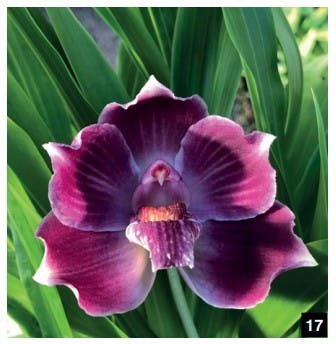
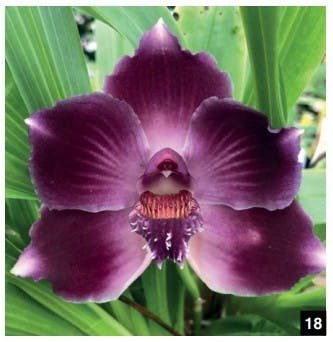
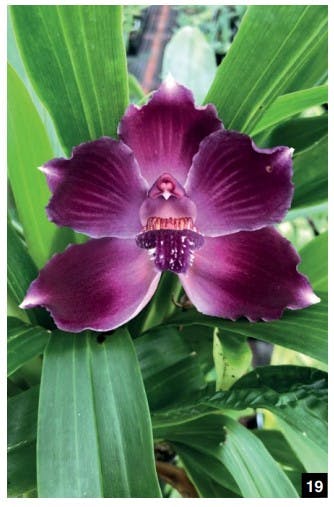
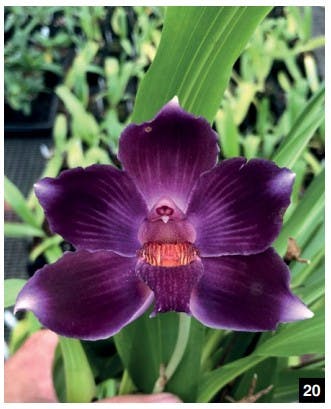
I can remember clearly the first time I saw a photo of Pescatoria Alice Hipkins (lehmannii × coelestis). It was the moment I seriously considered growing plants of this genus. I was researching Sarcochilus on the Australian Orchid Council website and saw a photograph of what was at the time called Pescatobollea Alice Hipkins and was just floored by the color and shape of this hybrid. I first found it for sale as a single seedling from Orquideas Katia in Colombia, who brought it to a show in California. I was very happy to get it, and it became Pes. Alice Hipkins ‘Katia’s Pick’. Imagine my surprise when I saw my good friend Mark Pendleton, who registered Pes. California Plum (among more than 1,000 other registrations, sometimes without proper attribution, including many of the early hybrids with Phragmipedium besseae), had remade this hybrid. I promptly purchased many of the plants, and as they have bloomed out, they have proven to be a very special grex. Again, this grex fulfills several of my breeding criteria, including beautiful, rounded, blue flowers, ease of growth, rapid growth, and frequent flowering, but they are not small plants, so that is still work to do. But, I have selected a great number of them to continue breeding with and to work to miniaturize; hybrids with them are in various stages of production at Sunset Valley Orchids.
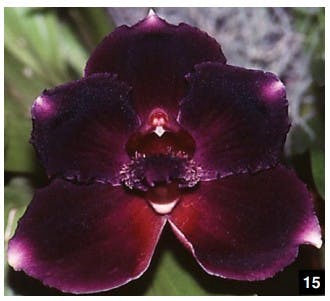
[15] Pescatoria Alice Hipkins ‘Peats Ridge’ AM/AOS. Photograph courtesy of the Australian Orchid Council.
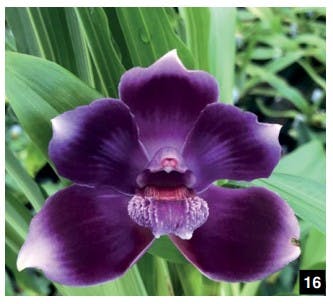
[16] Pescatoria Alice Hipkins ‘Katia’s Pick’
[17] Pescatoria Alice Hipkins ‘O’Side’s Best’
[18] Pescatoria Alice Hipkins ‘O’Side’s Majestic’
[19] Pescatoria Alice Hipkins ‘O’Side’s Majesty’
[20] Pescatoria Alice Hipkins ‘O’Side’s Perfect Shape’
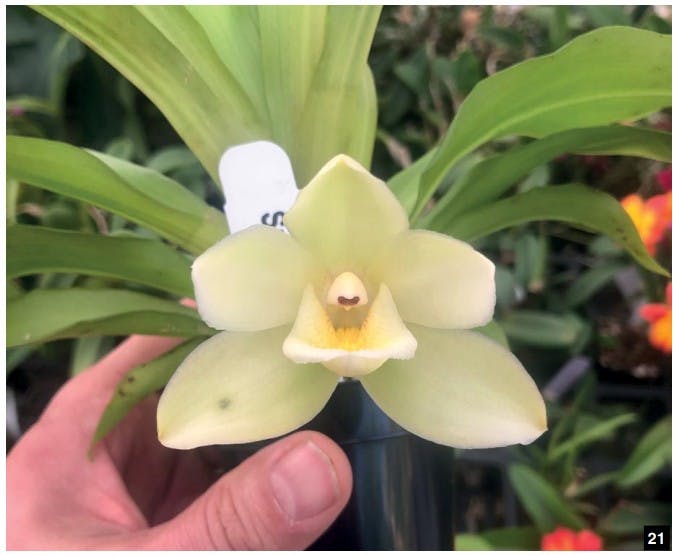
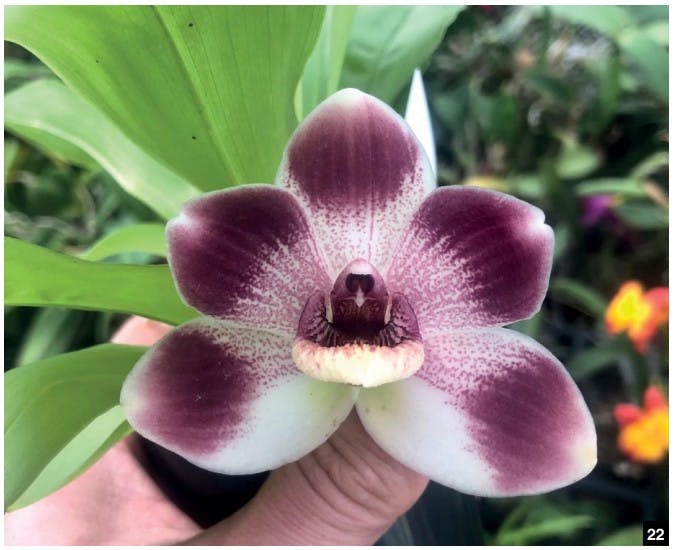
H Y B R I D S O F P E S C A T O R I A CORONARIA As mentioned in the previous article, I am enamored with this species, and specifically the cultivar ‘Andrea’ AM/AOS, preserved in the collection of Arnie Klehm and gifted to me in the early 2000s. Unfortunately, clarity with its use as a parent in producing plants that meet the above breeding characteristics is difficult to obtain. Most of the offspring of this parent are no longer extant. Hybrids, such as Pes. California Plum (× lehmannii), Pes. Coronation (× klabochorum) and Pes. Violet Crown (× coelestis), all seem like they would probably fulfill the same criteria as crosses with Pes. lehmannii mentioned above, but plants of these crosses seem to be gone. Some photographs remain, and Pes. Coronation ‘Linda’s Surprise’ AM/AOS looks quite beautiful. I made the cross of Pes. coronaria and Pes. cerina, hoping for the different color profile that Pes. cerina seems to bring to its offspring. Indeed, the flowers have been quite beautiful, with varying levels of blue color, including nearly white. I named the cross Pes. Blueberry Muffin, because sometimes the muffin has a lot of blueberries, and sometimes it has none. It has been a beautiful cross, with ‘Oside’s Ka-Bloom’ AM/AOS a standout. Like Pes. lehmannii hybrids, they have met several of the breeding parameters above, including good shape, good color, frequent flowering, easy growth, and short time to flowering, but they are not everblooming or fragrant, and while not as large as Pes. Alice Hipkins, they are not miniature. I have high hopes for their offspring and will work to further miniaturize the plants and encourage everblooming tendencies.
[21] Pescatoria Blueberry Muffin ‘O’Side’s Ka-Bloom’ AM/AOS
[22] Pescatoria Blueberry Muffin ‘Light’
HYBRIDS OF WARCZEWICZELLA CANDIDA This species also figured heavily in the last article, as my favorite species in the former Cochleanthes/ Warczwiczella group. It has exceptionally regular flowers for this group, with sepals, petals and lip all in the same plane, and quite rounded and full. It is also deliciously, and intensely fragrant, and one little flower from any of the Wcz. candida plants can perfume the whole greenhouse. Only one other grower has registered a hybrid with it, Wcz. Lip Blush, the cross with Wcz. amazonica, registered by Lehua in 1999. It has the same problems as most Wcz. amazonica hybrids, with a flower shape that is both irregular and reflexed, but has the beautiful, large flat lip of amazonica. I detailed problems with using Wcz. amazonica as a parent towards achieving my goals in the previous article, and I have not made hybrids with it.
My earliest orchid mentors were Tom McBride and Gary Krause at The Little Greenhouse outside Baltimore. I spent hours there when I was young, enjoying an incredible mixed collection of orchids, especially in the cold Maryland winters, where the greenhouse was a tropical refuge from the chill outdoors. Gary was a difficult person to please and demanded my closest attention and best work. A smile from him was meaningful. He was the best kind of mentor and insisted on rapid growth in understanding of orchids, and most importantly, recognizing problems with plants and correcting them. He passed away in 2023. In their wonderfully mixed collection, Tom and Gary managed to have some spectacular species and hybrids in the Pescatoria Alliance, including a beautiful, awarded Pescatoria dayana ‘Harford’ AM/AOS that had grown into an incredible specimen. As a judge, Tom befriended John Dunkleberger, a grower and judge from southern Pennsylvania. John did some very interesting breeding in the Pescatoria Alliance, particularly focused on breeding with kefersteinias. Building on the success of breeders such as Thomas Toulemonde (who registered Kfz. Sua Mena [Wcz. amazonica × Kefst. tolimensis]), and George Black (who originally registered Kfz. Ash Trees [Wcz. marginata × Kefst. tolimensis]), Dunkleberger made several interesting crosses with Kefersteinia. He registered Keferhyncha Success and Keferhyncha Gargoyle, crosses of Kefst. tolimensis and Chondrorhyncha lendyana and Chdrh. amabilis, respectively, both in 2008. He registered Keftorella Peaches N’Cream (Kfz. Sua Mena × Pes. cerina) in 2007. In the same year, he registered Cochlestienella Troll, Kfz. Sua Mena × Kefth. Jim’s Gem (which itself was registered by James Rumrill in 1990), and Kefericzella Little Bit, Kfz. Sua Mena × Kefst. auriculata. In addition, he remade both Kfz. Ash Trees and Kfz. Sua Mena. This set of Kefersteinia hybrids represents the largest group of breeding in this genus in the United States. Thankfully, Tom and Gary maintained some of these hybrids for nearly 20 years; it has been incredibly interesting to grow, flower and evaluate them over the last decade or so. I got my plant of Kfz. Ash Trees ‘Stunning’ from the Little Greenhouse in 2010, specifically with a mind to cross it with Pes. Alice Hipkins. To me, Kfz. Ash Trees could help to miniaturize large pescatorias, and it contained Wcz. marginata, so it should be able to breed blue in the subsequent generation. As I grew the Kfz. Ash Trees plant over the year, trying to find Pes. Alice Hipkins to breed with it, I noticed that it seemed to be in bloom all the time. I actually started keeping track in 2021. It has not been out of bloom since. The photograph of the plant is instructive: it is holding a six month-old seed capsule, has copious old inflorescences since I cleaned it last, about a year previously, and is in flower and bud all over the plant. Now, Kfz. Ash Trees is not without problems. It is not blue, fragrant, or really a very regular or round flower. But it is miniature, exceptionally easy to grow, and everblooming. Before I was able to get a Pes. Alice Hipkins, I thought I would try to cross it with Warczewiczella candida, to see if Kfz. Ash Trees was able to breed blue in the next generation.
[23] Kefericzella Ash Trees O’Side’s Stunning

[24] Kefericzella Ash Trees
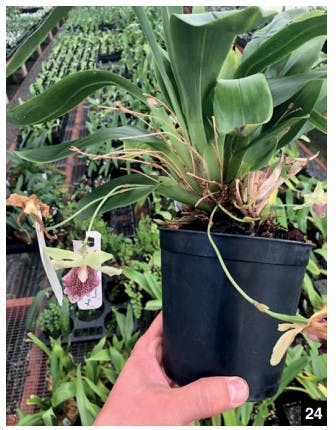
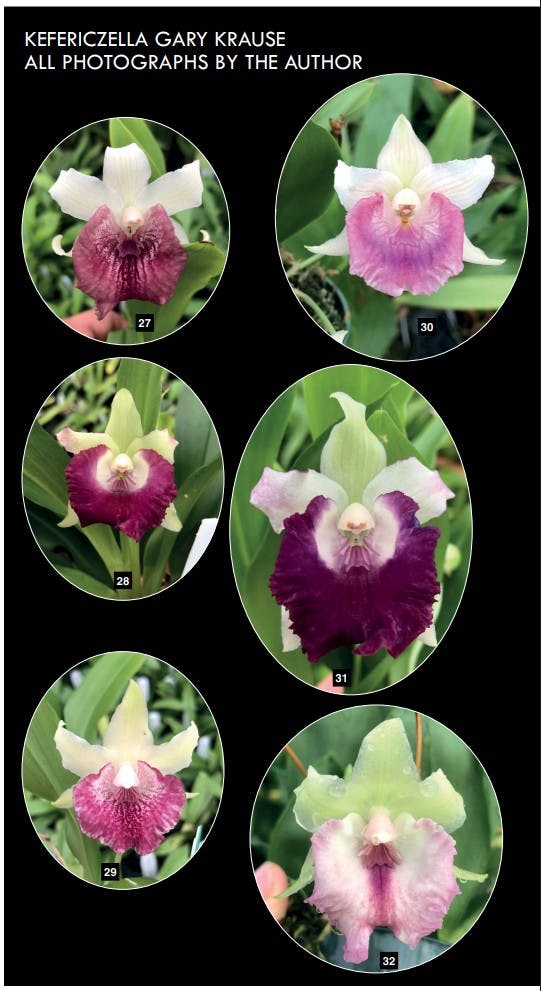
I registered Kfz. Gary Krause (Ash Trees ‘Stunning’ × Wcz. candida ‘Oside’s Sweet’) in 2023. It seemed like a fitting tribute to my mentor, who preserved Kfz. Ash Trees for so long. As they began to flower, I was very excited by the result. The plants matured quickly, moving from flasks to plug trays to 3-inch (7.5 cm) pots in less than a year. In just three months after transplanting to 3-inch (7.5 cm) pots, the first plants flowered, with round, full, regular flowers, with lips in beautiful shades of deep rose and dark blue, combined with white and chartreuse sepals and petals. The flowers were fragrant, taking after the Wcz. candida parent with a beautiful, roselike, sweet fragrance. Now, two years later, some of the select plants have matured into beautiful specimens, potted into 4–5- inch (10–12.5 cm) pots. The photograph of Kfz. Ash Trees ‘Lip Service’ in a 4-inch (10 cm) pot is instructive: the plant is small, has lots of flowers and buds in various stages of maturity and will bloom over the course of the next several months. The plants are about 8 inches (20 cm) tall, so nicely miniature. They flower frequently but are not quite everblooming. I am hoping that as they get older, they will be. One of the cultivars, ‘Oside’s Purple Blush’, has bloomed for the last 10 months, but it is still too early to tell whether that will continue. I am excited about this cross, and have remade it, and also sib-crossed them, so I should have more data to collect in the future. It is nice to end with a very positive cross.
[25] Warczewiczella candida ‘O’Side’s Sweet
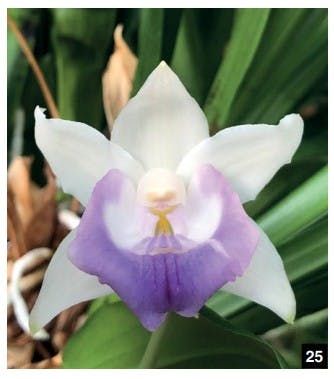
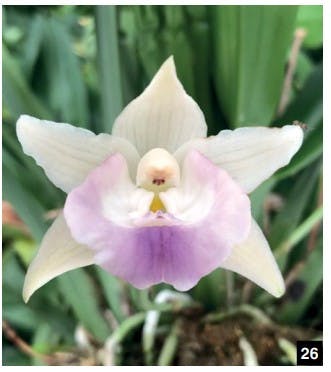
[26] Warczewiczella candida ‘O’Side’s Perfect Shape
GROWING PESCATORIA ALLIANCE PLANTS These plants are exceptionally easy to grow. I grow with a large collection of paphiopedilums, in low light, intermediate temperatures and lots of water. One of my goals in breeding this alliance is to make plants that are easy to grow indoors and under lights, in consistent conditions yearround. These are plants that experience little seasonality in nature, and so need conditions much like your home, where the temperature and light level (and hopefully the frequency of watering) stay very similar all year long. That allows them to make and mature new growths all year, and to bloom whenever those growths mature. This encourages their everblooming nature. I grow them in good-quality New Zealand sphagnum moss in plastic pots. I grow some hanging, and they seem to enjoy that, and it is a good way to see the blooms. They are grown in a large greenhouse in the complex at Sunset Valley Orchids and are shaded to about 1,500 footcandles (85% shade). The heater turns on at 50 F (10 C), but the plants are at the far end of the greenhouse, so they definitely experience temperatures well into the 40s F (>5 C). At the upper end, Vista, California can get very hot, well above 100 F (37.8 C) during the day for weeks at a time in the summer. I water them frequently, once per week in the winter and two or three times per week during the rest of the year, depending on the temperature. They stay very wet, and seem to enjoy that, pushing themselves out of their pots with immense root growth. Helping this along, we fertilize at about ½ teaspoon of fertilizer per gallon (~⅔ ml/l), every watering, into good-quality, lowhardness water. They are easy to grow and very rewarding with all of their flowers. I encouraged you last time to try growing the species in the background of these crosses; I will encourage you now to try the hybrids as well! Try something new!
[27] Kefericzella Gary Krause #1
[28] Kefericzella Gary Krause #2
[29] Kefericzella Gary Krause #3
[30] Kefericzella Gary Krause ‘Lip service’
[31] Kefericzella Gary Krause ‘O’Side’s Blueberries’
[32] Kefericzella Gary Krause ‘O’Side’s Purple Blush’
[33] Kefericzella Gary Krause ‘O’side’s Purple Monster’
[34] Kefericzella Gary Krause ‘O’Sides Purple Tips’
[35] Kefericzella Gary Krause ‘O’Side’s Stunning’
[36] Kefericzella Gary Krause ‘Sunset Valley Orchids’
[37] Kefericzella Gary Krause plant

—Since Tim was young, one of his passions has always been plants. He began growing orchids in high school and expanded his collection as an offshoot from working at Longwood Gardens in Philadelphia just after college. From the very beginning, it was all about paphiopedilums, particularly awarded and select clones of historic importance, of which his collection numbers in the thousands. While he loves finding old, rare stepping stones in paph breeding, he also does a little hybridizing of his own, and growing and flowering his hybrids is very exciting. He was once the youngest accredited judge with the American Orchid Society and has been a judge now for 20 years; he has served in various capacities with various orchid societies in California and on the East Coast. Recently, he partnered with Fred Clarke to greatly expand the selection of paphs at Sunset Valley Orchids through the acquisition of significant parts of Sam Tsui’s collection at Orchid Inn. He loves meeting other people who like orchids too, and doing so often finds him traveling to shows, vendors and peoples’ greenhouses to see the latest and greatest in new hybrids and species. He likes to be involved in plants as much as possible: in addition to Longwood, he worked at the Smithsonian Institution tending to their orchids, and for years for the United States National Arboretum, collecting rare nonorchid plants and documenting cultivated species and hybrids for their herbarium. In short, Tim Culbertson really likes plants of all kinds (email twculber@gmail.com).
Reference Culbertson, T. 2024. Breeding with the Pescatoria Alliance. Try Something New. Orchids 93(3):192–199.