

Pescatoria coelestis 'Elektra' FCC--CHALLENGE-2026-02-20
Posted on February 20, 2026
PDFLinks:
Judging Center: Florida–Caribbean
Award Number: 20050702
Award Date: May 14, 2005
Awarded As: FCC
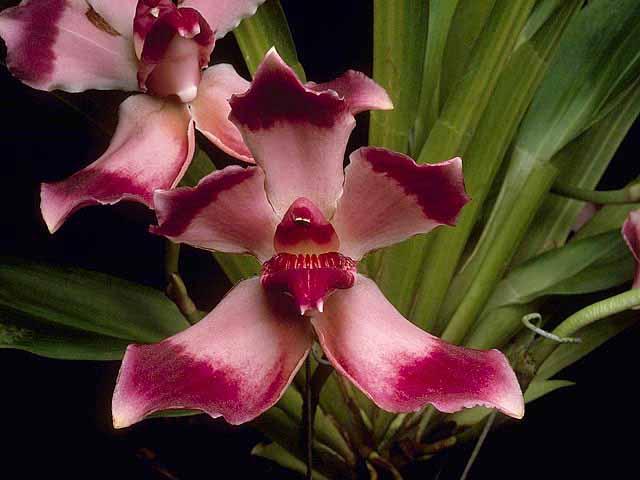
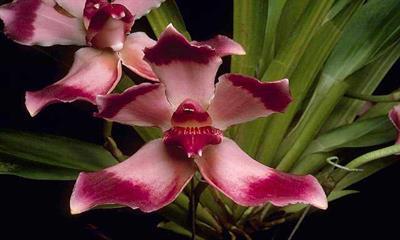
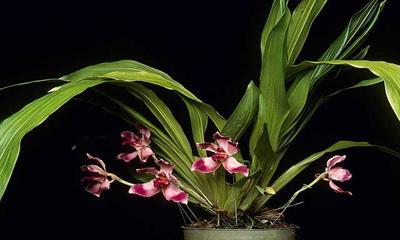
Request for SITF Review: Possible Misidentification of Pescatoria coelestis ‘Elektra’Awards: FCC/AOS 91 (20050702); CCM/AOS 81 (20050703)Judging Center: Florida–CaribbeanReason for Review: Morphology inconsistent with Pes. coelestis; phenotype strongly indicative of primary hybrid Pescatoria Strawberry Fair (coelestis × klabochorum) or the equivalent naturally occurring hybrid.Why this plant warrants scrutinyOf the 14 total flower quality awards given to Pescatoria coelestis, only five were given within the US. ‘Elektra’ is the only plant whose morphology deviates sharply from the species. Given how rarely this genus is exhibited, it is understandable that the judging center may not have recognized these differences or elevated the plant for SITF review at the time. I believe this plant was misidentified as Pes. coelestis and SITF may wish to consider investigating further. Key morphological inconsistencies with Pescatoria coelestisWhitten et al. (Lankesteriana 5(2): 2005) describe the historic distinction between Bollea and Pescatoria (before proposing to lump into Pescatoria) as largely hinging on column width, despite shared general floral shape. Like other species with wide columns that were also lumped (including lalindei, lawrenceana, hirtzii, violacea, and pulvinaris), coelestis was long classified within Bollea, from its placement first published by Reichenbach f. in The Gardeners’ Chronicle (n.s. 5: 756, 1876) until molecular evidence prompted the 2005 merger. Among numerous references citing Bollea coelestis throughout this period, explicit written descriptions of a yellow or golden callus can be found, including “Labelli callo aureo, sulcato” [“golden, furrowed callus of the lip” Schlechter (1915)], and “Calosidade do labelo amarela, bem desenvolvida” [“Lip callus yellow, well developed” Hoehne (1953)]. A fully yellow callus is visually shown in a classical illustration by Constantin (1911-1913). Pescatoria coelestis, from Internet Orchid Species Encyclopedia. Photo by Eric Hunt. Illustration of Bollea coelestis, by Costantin, J. (1911–1913). Whitten, W. M., Williams, N. H., Dressler, R. L., Gerlach, G., & Pupulin, F. (2005). Generic relationships of Zygopetalinae (Orchidaceae: Cymbidieae): combined molecular evidence. Lankesteriana International Journal on Orchidology, 5(2), 87-107.Reichenbach f. (1876). The Gardeners’ Chronicle, new series, 5: 756.Schlechter, R. (1915). Die Orchideen. Berlin.Hoehne, F.C. (1953). Flora Brasiliensis, Orchidaceae.Costantin, J. (1911–1913). Atlas en couleurs des orchidées cultivées (plate 14, fig. 4: Bollea coelestis). Biblioteca Digital del Real Jardín Botánico de Madrid. Retrieved from https://bibdigital.rjb.csic.es/viewer/16070/?offset=#page=123 From the historical record, typical coelestis exhibits:• a wide galeate/hooded column• a fully yellow callus on the lip‘Elektra’ exhibits neither of these hallmark traits. No other awarded coelestis lacks both. These two deviations justify reconsidering its species identity. Pescatoria klabochorum. Wikipedia Commons, by Orchi. Pescatoria klabochorum. Orchidroots, by Mundiflora Farm.Plausible alternative identitiesIt is plausible that ‘Elektra’ might be a primary hybrid, rather than an atypical coelestis form. One key species to consider is Pescatoria klabochorum:• Coloration: Elektra’s lightened cream base color and wine-red overlaid distal one-third (as opposed to coerulea hues) follows the typical klabochorum pattern.• Red callus margins: Elektra shows deep red color along the keel margins of its callus, unlike the uniformly yellow callus typical of coelestis. These markings resemble klabochorum and are absent from other awarded coelestis and from historical descriptions or illustrations.• Narrower column: The column is much reduced in width and appears intermediate toward klabochorum, a narrow-column species that was never part of Bollea.• Lip texture: While difficult to confirm from the award photo, it appears Elektra may lack a glabrous midlobe. Some texture would be consistent with influence from fimbriated-lip species such as klabochorum.Both coelestis and klabochorum are sympatric, and natural hybrids have been documented. High-resolution images taken in Colombia (by D. Haelterman, 2012) show plants appearing intermediate between the two species, with Haelterman himself proposing it may be a coelestis × klabochorum hybrid. This supports the plausibility that ‘Elektra’ may be a similar natural hybrid distributed commercially as pure coelestis.“The lip of this plant does not look like the lip of what was called Bollea before [they] were lumped into Pescatoria, it seems intermediate between what was formerly called Pescatoria and what has been called Bollea. Could it be that this is an example of [a] hybrid between Pescatoria (ex Bollea) coelestis [and] Pescatoria klabochorum?”Man-made hybridization within Pescatoria remains rare, resulting in few registered hybrids and comparatively little photographic documentation. Strawberry Fair (coelestis × klabochorum) is the only coelestis hybrid with multigenerational progeny. The only accessible image is from Tim Culbertson’s July 2023 AOS webinar, “Beautiful Soft-leaved Orchids,” included below for comparison. Similar coloration, red callus margins, and narrower column width support a second plausibility that ‘Elektra’ may represent a man-made Strawberry Fair, possibly mislabeled as pure coelestis through omission of klabochorum during data entry or label printing, or through a selfing error.Pescatoria Strawberry Fair, from AOS webinar “Beautiful Soft-leaved Orchids” by Tim Culbertson, July 20th, 2023.Although genetic testing would be needed for absolute confirmation, I propose that Elektra’s morphological inconsistencies with coelestis more plausibly indicate a man-made hybrid, like Pescatoria Strawberry Fair (coelestis × klabochorum), or the equivalent natural hybrid, than an atypical coelestis form, based on its klabochorum-like traits and the known historical record. Given the scarcity of reference material, consulting the following hybridizers and growers may prove helpful:• Colombia: Daniel Piedrahita (who has twice exhibited FCC-quality coelestis)• US: Tim Culbertson, Arnold Klehm, Blake Kruz FCC Avg (without ‘Elektra’) FCC Avg (with ‘Elektra’) ‘Elektra’No. Flowers 10.0 9.0 5No. of Inflor 11.3 10.2 6Nat Spr H 9.4 9.2 8.5Nat Spr V 5.8 5.9 6.5Petal W 2.8 2.7 2.4Petal L 4.2 4.3 4.5Lip W 2.3 2.2 2.1Lip L 2.9 3.0 3.6Why reviewing (or correcting) mattersThis is not about the numerical impact of invalidating these awards, as the effect on FCC averages is minor. However, leaving ‘Elektra’ as a confirmed species award has three major consequences:1. It distorts the defining traits of Pescatoria coelestis within our database, which is often trusted for reliable reference. Future judges may incorrectly expand the species’ acceptable characteristics, making it harder to judge line-bred coelestis moving forward.2. It risks erasing critical historical distinctions of the former Bollea group. Column morphology is foundational to that lineage.3. It compromises identification accuracy going forward, especially in this genus where few references exist.While I understand that only genetic sequencing could confirm Elektra’s species purity, its unusual phenotype and plausible alternative identities support at least a reexamination. I respectfully request that SITF:• review the morphological inconsistencies of Pes. coelestis ‘Elektra’;• assess whether its phenotype aligns more closely with Pescatoria Strawberry Fair, the equivalent naturally occurring hybrid, or another coelestis-related hybrid;• consider consulting Pescatoria specialists; and• determine whether the FCC and CCM should be flagged as a probable misidentification.
See more Pescatoria SITF listings
Learn more about the Pescatoria genus

Discover the top vendors in the orchid community and their special offers on all things orchid.
If you are an AOS member, you also save 5% from every vendor.
Two-Year AOS members also receive over $600 worth of coupons from the ELITE Marketplace Partners.

FREE ACCESS: Orchid DealWire
Get notified when orchid vendors have special promotions and exclusive savings.