

HOMOTYPIC SYNONYM
Acacallis cyanea Lindl. (1853)
HETEROTYPIC SYNONYMS
Acacallis caerulea (Hoehne) Hoehne 1923, Acacallis hoehnei Schltr. 1918, Acacallis rosariana V.P. Castro & J.B.F. Silva 2001, Aganisia rosariana (V.P. Castro & J.B.F. Silva) F. Barros & L.R.S. Guim, Aganisia tricolor N.E. Br. 1885, Kochiophyton caeruleum Hoehne 1910, Kochiophyton negrense Schltr. ex Cogn. 1906 and Warrea cinerea Benth. 1881.
Aganisia, a genus with only three species (Plants of the World Online 2025), Aganisia cyanea Rchb. f. (1869), Agn. fimbrata Rchb. f. (1874) and Agn. pulchella Lindl. (1839), are pseudobulbous epiphytes that grow primarily in wet tropical biomes of South America. These epiphytic plants have been found throughout the upper Amazon basin, particularly above the confluence of the Amazon and the Río Negro, and along the upper Río Orinoco above Puerto Ayacucho in western Venezuela but have a native range down to northern Peru. Plants grow in flat, low-lying forests in areas and, during seasonal floods, are completely submerged, without harm to the plants.
Aganisia cyanea, a rare species, can be found growing on trees in the warmer lowland forests of the Amazon basin, attached to the lower section of large tree trunks. Plants grow on a creeping rhizome with pseudobulbs somewhat distantly spaced along the rhizome. Peudobulbs carry one apical, pleated leaf and bloom from the base of the pseudobulb. A well-grown plant may produce a raceme of up to 10 flowers given the proper care and environment.
[1–2] Aganisia cyanea, a clone produced by selfing the clone ‘Blueberry Creme’. This batch was grown to blooming size in 3.25-inch (8.25 cm) pots and shifted up to 4-inch (10 cm) pots to allow room for the next one to two years of growth. Photograph courtesy of Jerry Fischer, Orchidweb Ltd.]
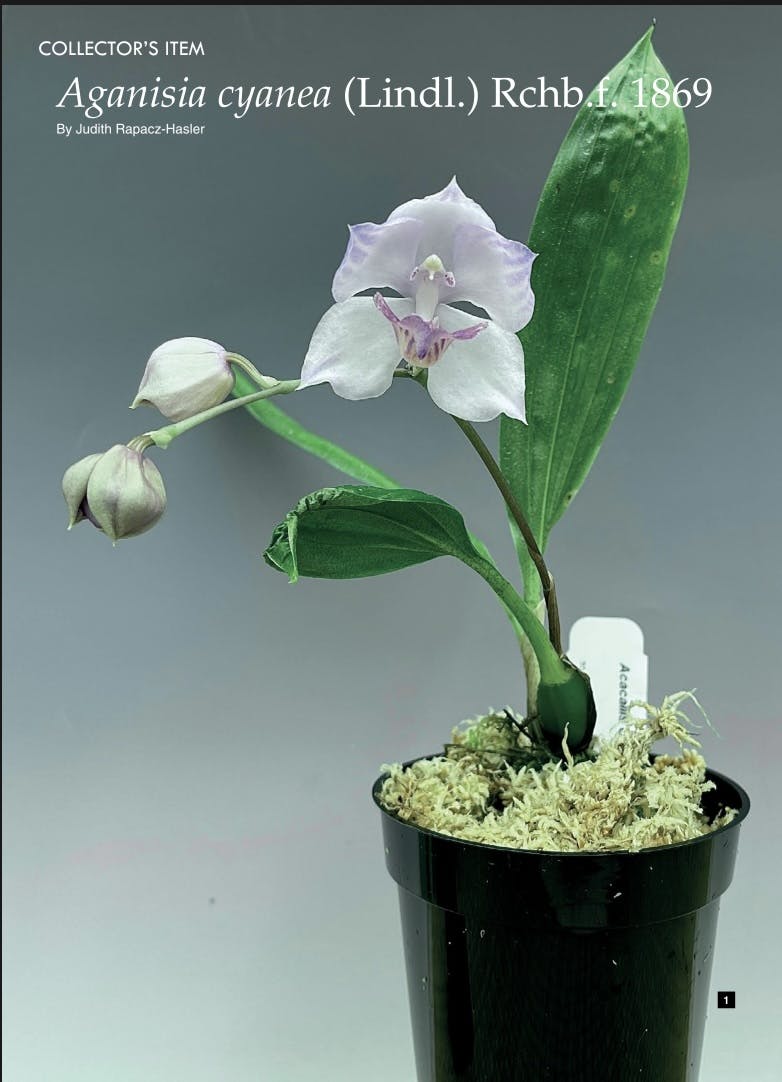
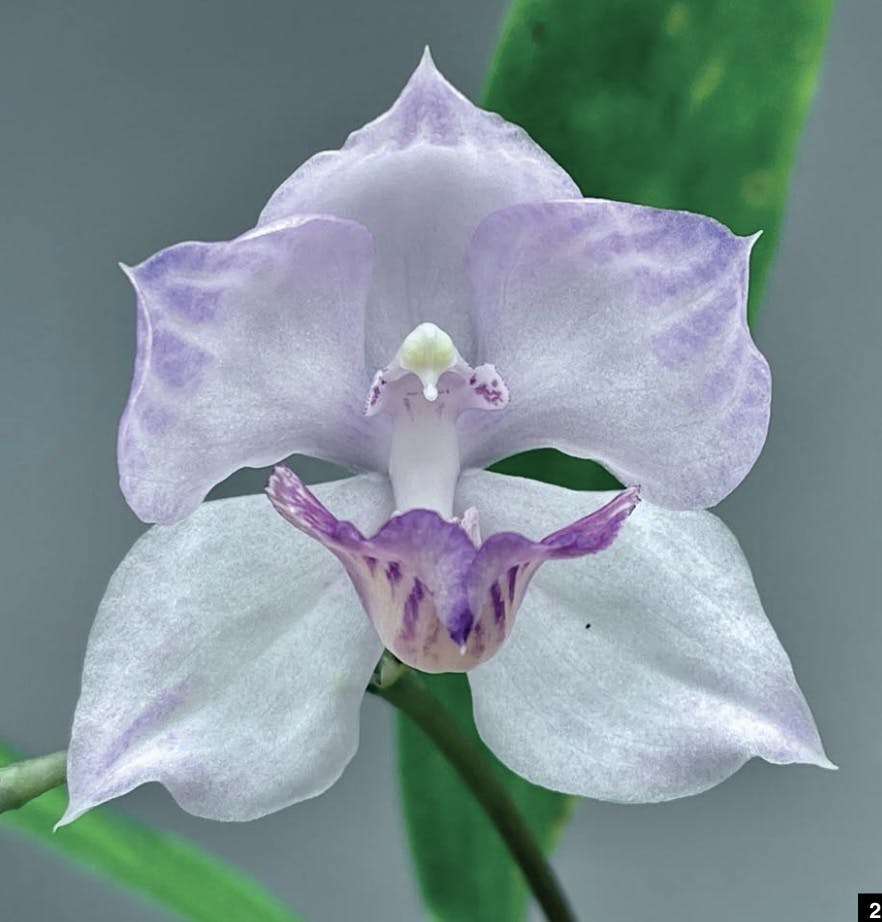
I noted this delicate, almost translucent, faintly blue, cupped flower posted on Facebook by Orchids Ltd. The flower pictured here is derived from a clone produced by selfing Orchidweb’s best clone called ‘Blueberry Creme’. The flower is faintly blue, accented by an indigo-purple lip. Sepals and petals are pale lilac, and petals are darker lilac distally. Flowers are 1.5–2 inches (3.8–5 cm) in diameter, and the flowering period can last for one to three months, depending on the temperature.
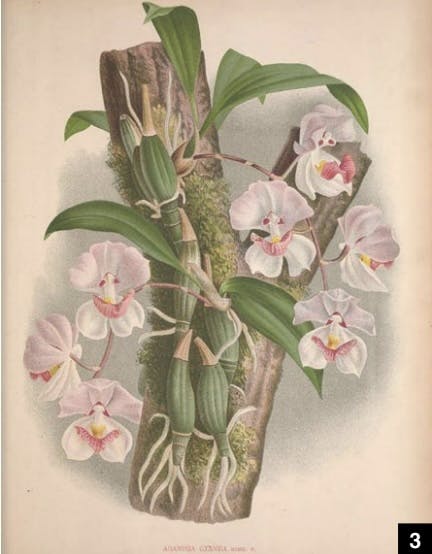
[3] Acacallis cyanea, Plate CL, Lindenia Icon. Des Orchidées, Volume 3, 1887.
In its native habitat, where floodwaters are rich in tannic acid, it appears that flowers are bluer than those produced in a more alkaline environment (Pers. Comm. Jerry Fischer).
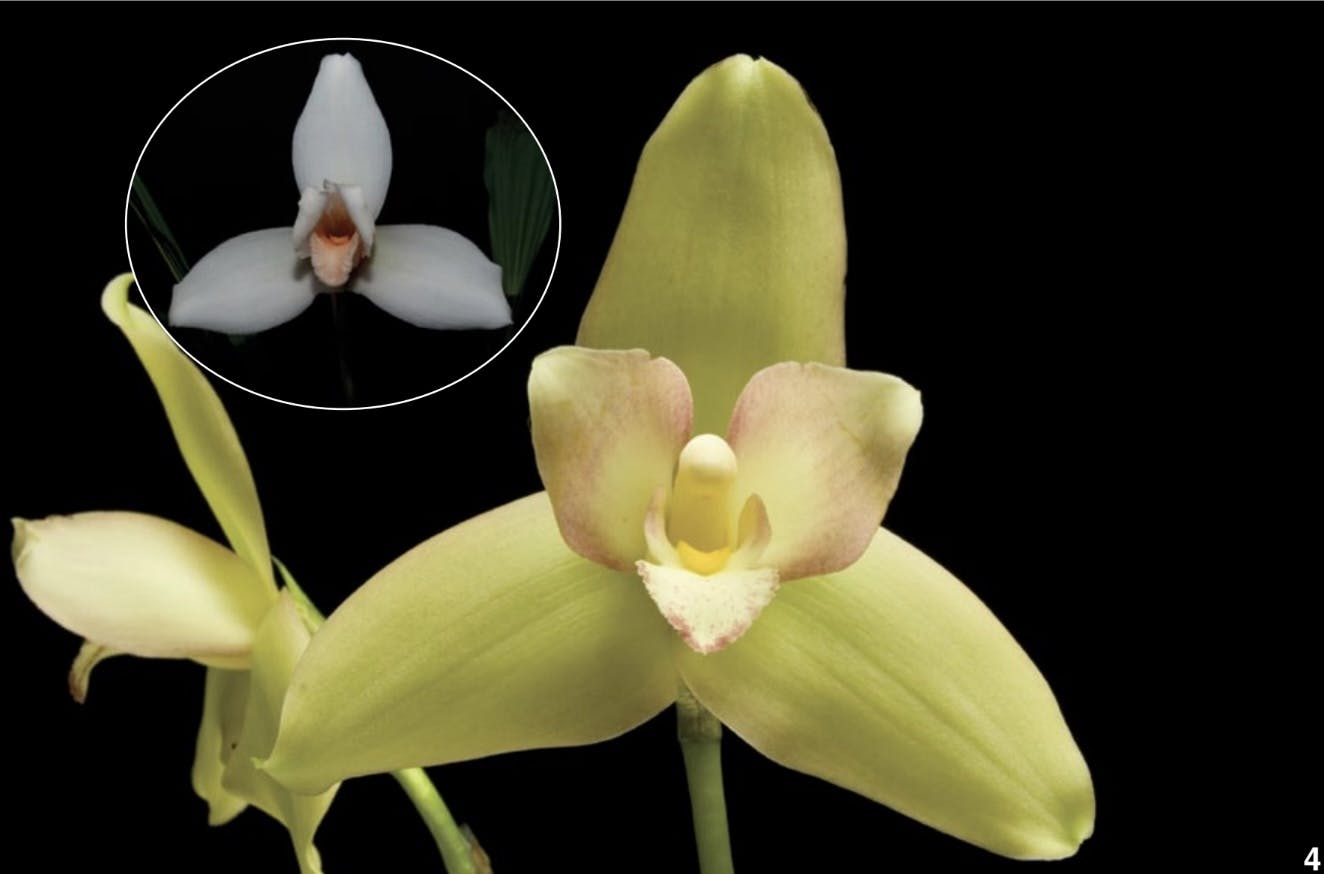
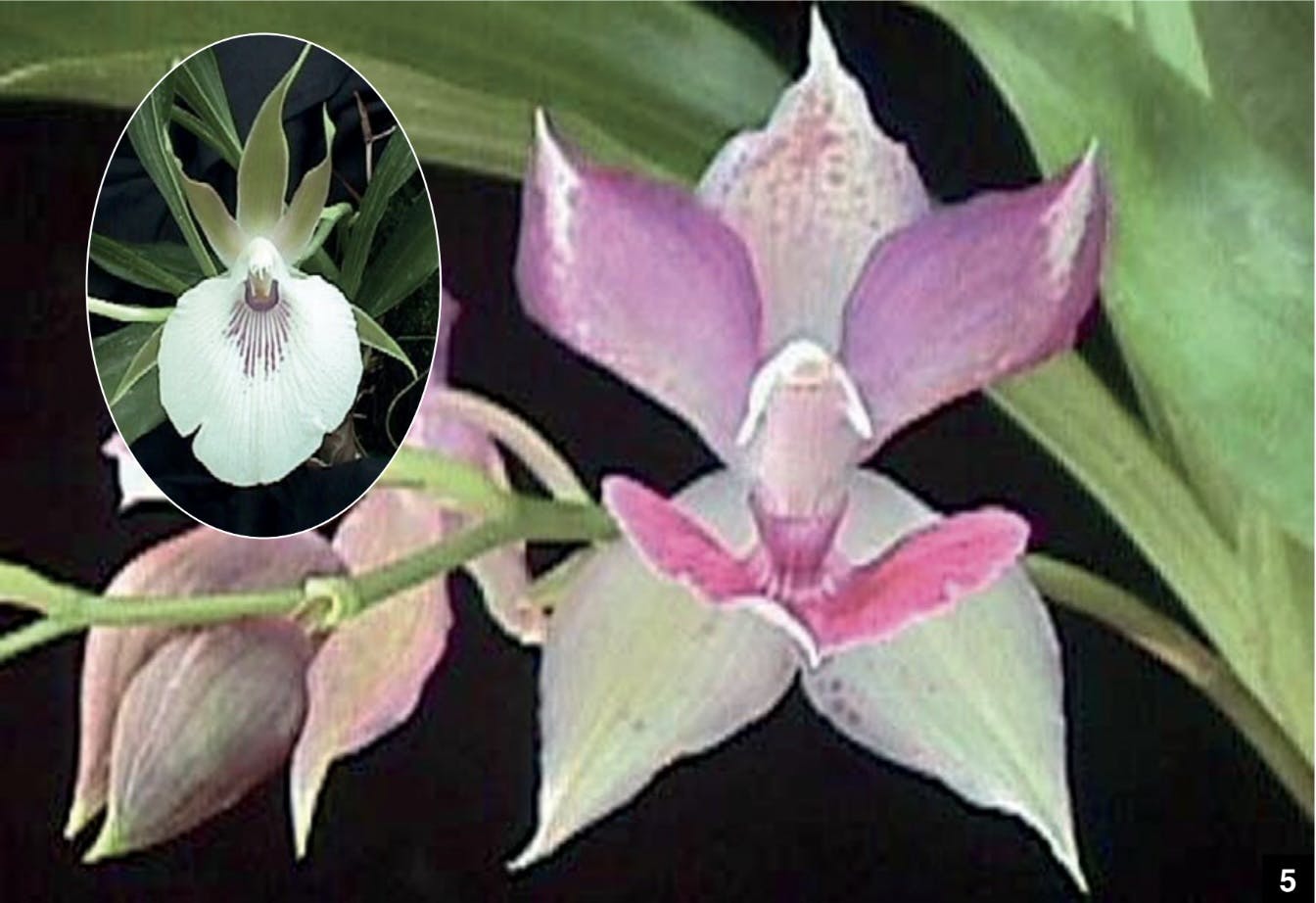
Aganisia cyanea has received several awards and is frequently used in hybridization with Pabstia, Lycaste, Zygopetalum, Bifrenaria, Cochleanthes and Otostylis. Examples of hybrids include Pabanisia Eva’s Blue Amazon (Agn. cyanea × Pabstia jugosa) registered by Orquideas Eva in 1995, Lycanisia Marie Riopelle (Agn. cyanea × Lycaste virginalis) registered by Marie Riopelle in 2009, Agasepalum Blue Butterfly (Zygosepalum labiosum × Agn. cyanea) registered by Exotic Orchids of Maui in 2000, Agananthes Kiritsubo (Cochleanthes wailesiana × Agn. cyanea) registered by Kokusai in 1998 Kokusai and Bifranisia Cyanthina (Bifrenaria tyrianthina × Agn. cyanea), registered by Hirota, Int., in 1997. Among these hybrids, crosses of Lycaste with Agn. cyanea (Lns. Marie Riopelle) and Zygosepalum with Agn. cyanea (Agsp. Blue Butterfly) are particularly interesting in colors and shapes. In addition, these two hybrids exemplify the various parental traits in the offspring.
[4] Lycanisia Marie Riopelle ‘Allegro’ AM/AOS (q); exhibitor: Marie Riopelle; photographer: Patty Drake. In hybrids with Lycaste, the form is dominated by the Lycaste parent and only the petals appear to be modified to create a somewhat flatter flower. Inset photograph: Lyc. virginalis var. armeniaca ‘Claudia de Archila’ AM/AOS; exhibitor: Fredy Archila Morales; photographer: Jorge Arnulfo Carlos Sanchez.
CULTURAL REQUIREMENTS
Intermediate light levels of 2,400–3,400 footcandles (25,800–36,600 lux, approximately 70–80% shade) are recommended, but plants can tolerate slightly lower light levels. Exposure to direct sunlight should be avoided, as the thin leaves are easily burned. Aganisia cyanea is an intermediate to warm-growing orchid with nightly temperatures around 60–65 F (15.6–18 C). Cooler temperatures may be tolerated for short periods of time. Daytime temperatures of 90 F (32 C) and even higher may be tolerated, provided there is ample air movement and humidity. Plants grow best in high quality New Zealand sphagnum moss for adequate drainage, hydration, aeration of the roots and even drying, although plants can be grown in other typical epiphytic mixes with adequate attention given to their water needs. The fact that plants can be completely submerged during seasonal summer floods suggests keeping them moist during the hot summer months. Use a balanced fertilizer, applied only once per month. If grown in sphagnum moss, less fertilizer is necessary because the moss holds nutrients.
[5] Agasepalum Blue Butterfly (× Zygosepalum labiosum). In hybrids with other Zygopetalinae, the traits of Agn. cyanea can be much more noticeable, ranging from blue color to flower form. Photograph courtesy of Michael Blietz, Exotic Orchids of Maui.
Aganisia cyanea, an orchid with fragrant, long-lasting flowers, makes a lovely addition to your collection!
— Judith Rapacz-Hasler is a member of the AOS editorial board. She travels frequently to orchid habitats in South America and Europe and maintains a small orchid collection (email: jorapacz@wisc.edu).
Additional Reading
Pfahl, J. 2022. Internet Orchid Species Photo Encyclopedia (IOSPE). https://www.orchidspecies.com/acacaliscyanea.htm. Accessed June 2024
Plants of the World Online 2025.