

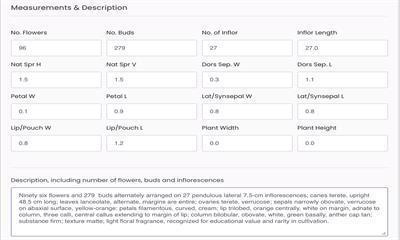
Epidendrum camposi 'Daxin Shu' CBR 2025-06-11. Determined to be Epidendrum myodes
Posted on June 11, 2025
Finding
SITF has determined this plant to be Epidendrum myodes, not Epi. camposii (Oct 2026). The line drawing from Icones Orchidacearum by Hagsater, et. al. found in the IOSPE is a clear match for this plant and also a very good photo by Franco Pupulin. A photo taken at Bosque de Paz in Costa Rica by Dr. Noelia Belfort-Oconitrillo, Lankester, which is a very good match this plant, can be found at: https://bosquedepaz.com/epidendrum-myodes_2 . Icones Orchidacearum, Fascicle 9, Pl. 963 has a description and drawing of Epi. myodes by Eric Hagsater that exactly matches this plant. The lip midlobe has three keels with the central keel extending from the base to almost the apex. The side lobes in the drawing have bilobed apices with the upper lobe obtuse, ovate and the lower lobe triangular as has this plant.


See more Epidendrum SITF listings
Learn more about the Epidendrum genus

Discover the top vendors in the orchid community and their special offers on all things orchid.
If you are an AOS member, you also save 5% from every vendor.
Two-Year AOS members also receive over $600 worth of coupons from the ELITE Marketplace Partners.

FREE ACCESS: Orchid DealWire
Get notified when orchid vendors have special promotions and exclusive savings.