Finding
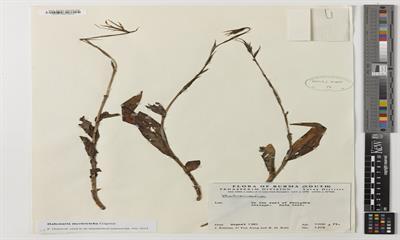
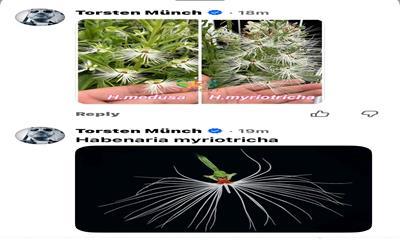
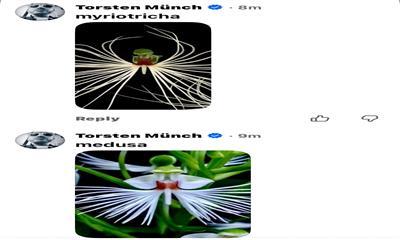
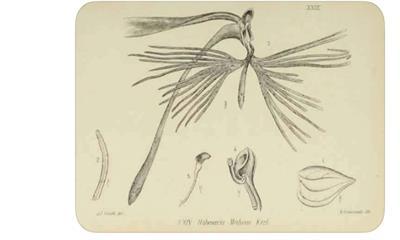
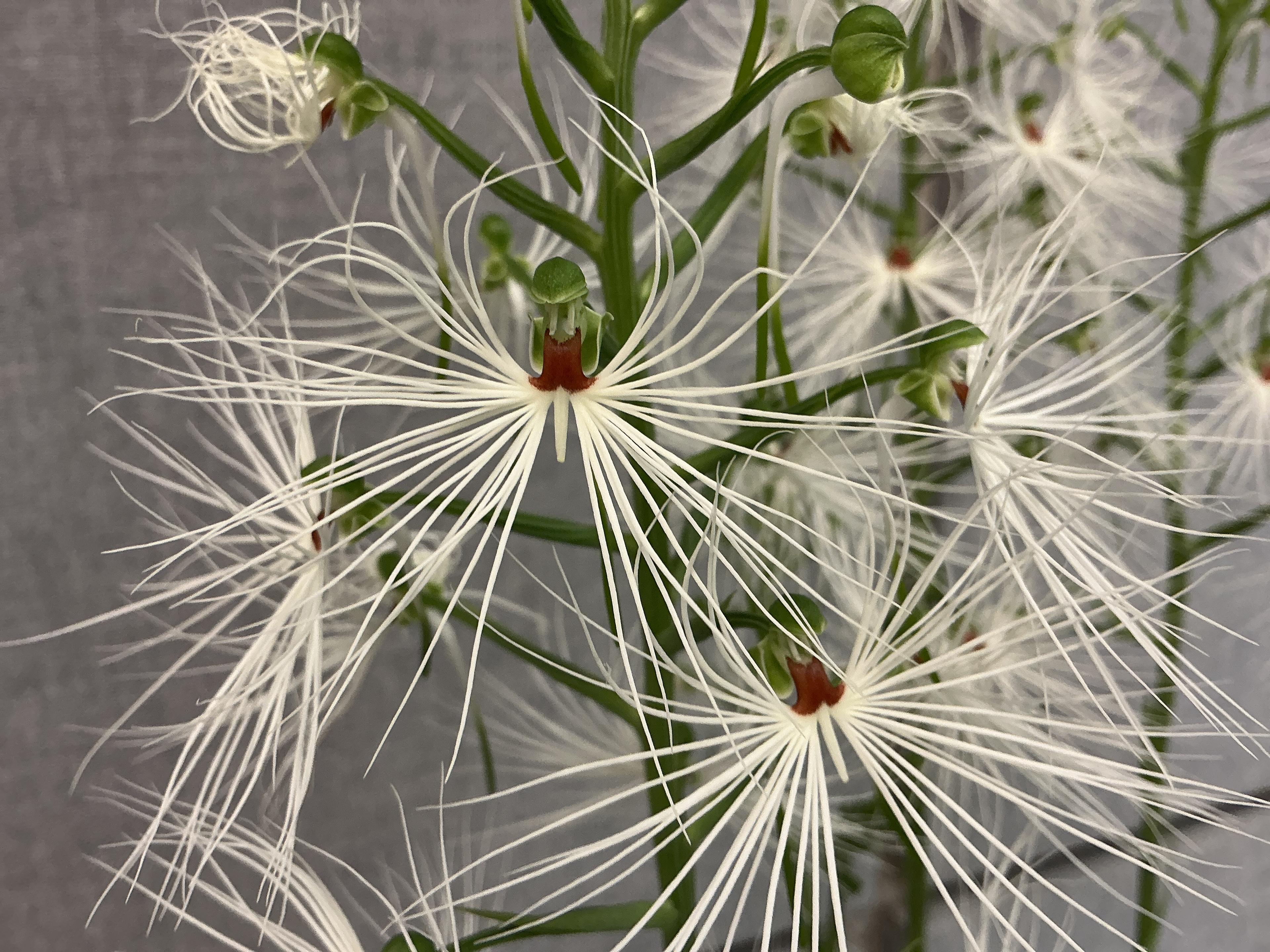
SITF confirms this plant as Habenaria myriotricha (Sep 2026). This was a difficult identification. There is great uncertainty in identifying the differences in H. medusa and H. myriotricha. Also similar is the species H. beccarii. Both medusa and myriotricha produce extraordinary white, spider-like flowers with red-marked lips and extremely long, thread-like lobes. Probably the key characteristic is the shape and arrangement of the filaments. In H. medusa, the filaments are directed more straight out towards the sides, usually with somewhat more filaments overall. In H. myriotricha, the filaments form a more rounded, radiating arrangement, extending outward in almost all directions, and there are usually somewhat fewer filaments. In appearance, some of the filaments on H. myriotricha curve up over the column, as is seen in the flower on this plant. Habenaria beccarii is another closely related species, but noticeably smaller and more compact. The lip on H. beccarii is distinctive, with approximately 15–20 fine, filament-like segments on each side lobe, while the central lobe is short and narrow.
Overall Length Of Growth Cane: 71.5cm from level of potting media to end of inflorescence
Number Of Leaves Per Growth Or Cane: 6 true leaves
Leaf Length: 22.0
Leaf Width: 5.5
Leaf Margin: entire
Leaf Shape: broadly linear
Pseudobulb Distance: Did not measure or observe corms
Inflorescence Overall Length: 71.5cm from level of potting media to end of inflorescence, 53.0cm from last true leaf
Inflorescence Arrangement: raceme
Inflorescence Dist Base To Bud: 23.5cm from last true leaf to attachment point of first flower
Inflorescence Dist Bet Flowers: 2.0cm to 3.0cm
Inflorescence Dist To Sepal: 0.4cm (pedicel), 3.3cm (pedicel and ovary(
Floral Bracts Length: 4.4cm
Floral Bracts Width: 0.8cm
Ovary Length: 2.9cm
Ovary Width: 0.4cm
Ovary Shape: cylindrical
Ovary Color: bright green, slightly glaucus
Ovary Texture: glabrous
Flower Natural Spread Length: 7.9cm
Flower Natural Spread Width: 9.7cm
Dorsal Sepal Length: 0.8cm
Dorsal Sepal Width: 0.4cm
Dorsal Sepal Cauda Length: NA
Dorsal Sepal Cauda Width: NA
Lateral Sepals Length: 0.5cm
Lateral Sepals Width: 0.3cm
Lateral Sepals Caudae Length: NA
Lateral Sepals Caudae Width: NA
Petals Length: NA
Petals Width: 0.1cm
Judging Center: Carolina’s Judging Center
Award Number: 20261578
Award Date: August 15, 2026
Awarded As: AM
Seventy-three flowers and 90 buds well arranged on six upright racemes to 53 cm with 2 developing racemes with an additional 29 buds; dorsal sepal and petals green; lip white, highly fimbriated with red mark basally; spur white, apical half green; substance thin; texture matte.Vendor unknown and of unknown provenanceIOSPEAOS Website(From AI) Habenaria medusa: Endemic strictly to Malesia (specifically the islands of Java, Sumatra, Sulawesi, and Borneo).Habenaria myriotricha: Native exclusively to Mainland Southeast Asia / Indo-China (specifically Thailand, Laos, Cambodia, Vietnam, and Southern China/Yunnan. Habenaria medusa: Typically features a highly crowded, densely packed spike of many flowers. Labellum (Lip) Base Color Pure white or occasionally cream-toned where the fringes meet the center. Bract Margins Usually smooth (entire). Size: Individual flowers average a slightly more compact 3.5 cm (1.4 inches) in diameter.Habenaria myriotricha: Typically features a lax, few-flowered inflorescence (more spaced out along the rachis). Labellum: Often displays a distinct red or reddish-pink blush right at the central throat/base of the labellum. Brach: Sterile and floral bracts feature margins that are minutely denticulate (finely toothed) or covered in short, tiny hairs. Size: Mature flowers can spread broader, occasionally recording up to 9 cm (3.5 inches) across the fringe tips.*If the origin is unknown (as is common with commercial nursery plants), inspect the bracts along the stem under a magnifying glass; fine hairs or microscopic teeth on the bract edges point directly to H. myriotricha.