

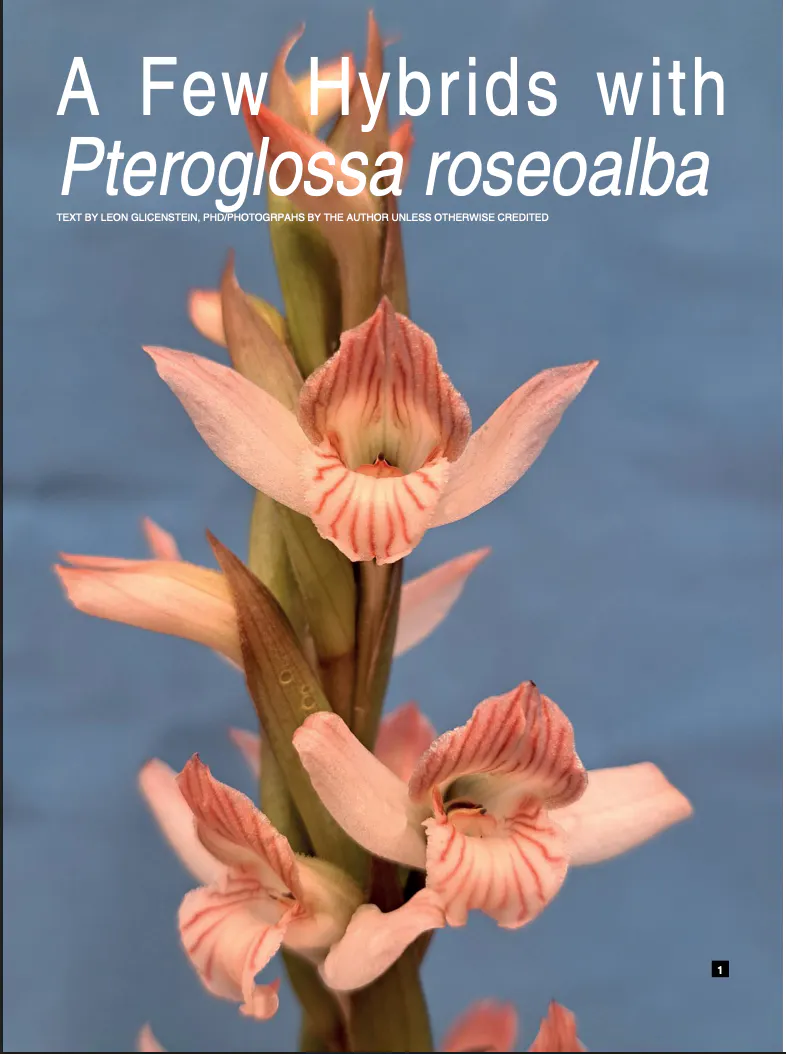
Pteroglossa roseoalba is a taxon found from southern Mexico through to Argentina in South America. It was first described by Reichenbach f. as Pelexia roseoalba in 1854 from a specimen collected in Venezuela. It has since gone through a series of nomenclatural reclassifications: Centrogenium [1919]; Eltroplectris [1982]; and finally, Pteroglossa [2002]. For those who are interested, it is botanically in the family Orchidaceae, subfamily Orchidoideae, tribe Cranichideae and subtribe Spiranthinae.
[1] An inflorescence of a light pink form of Pteroglossa roseoalba with visible striping. [E.A.Flachsland]
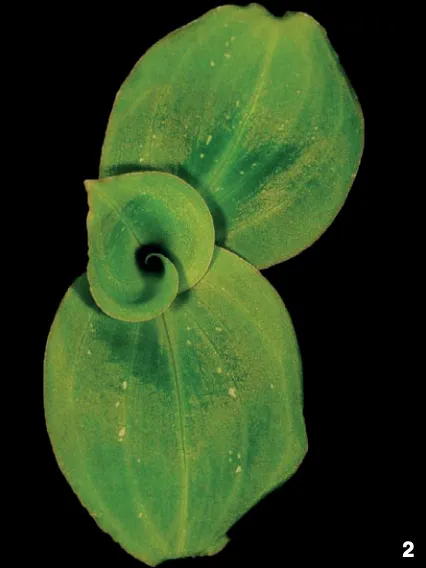
The plant is a terrestrial and grows as a rosette of about three to six dark green leaves, often spotted with varying amounts of silver markings. There is a dormancy period where the leaves usually die back. The inflorescence, which often arises before the leaves regrow, can be about 8 to 12 inches (20–30 cm) tall and produces several white to pink flowers approximately 1 inch (2.5 cm) across. The new growth can be prone to rot if kept too wet.
[2] Typical foliage of the rosette of Pteroglossa roseoalba. Some clones have more markings.
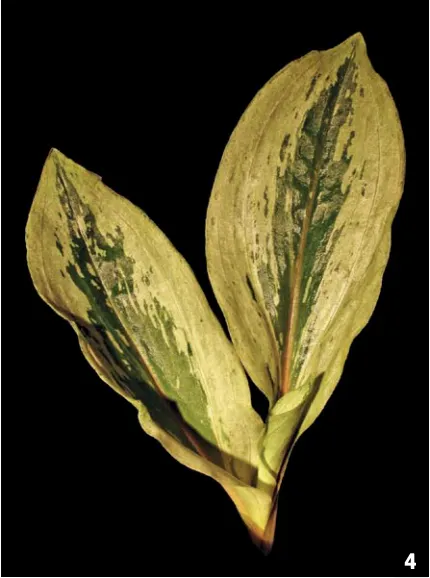
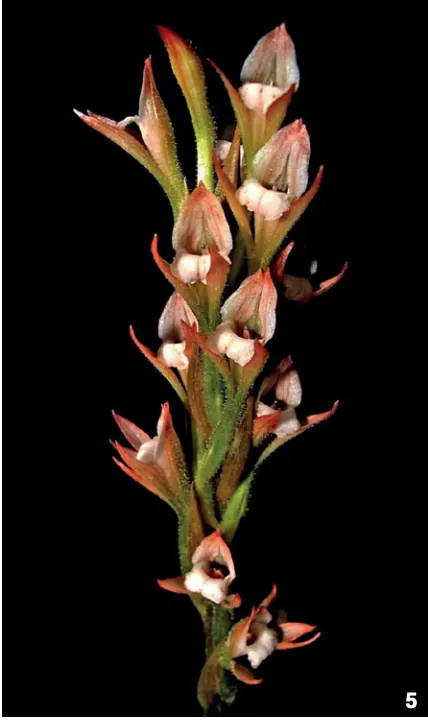
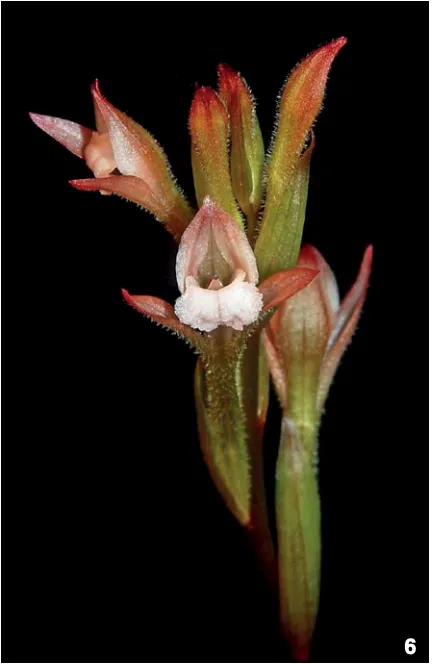
There are presently only four registered hybrids with Pteroglossa roseoalba. The first of these, Pterolexia Titania, was registered in 2015. It is a cross of Pelexia olivacea with Pteroglossa roseoalba. It may be classified as a painted-leaf orchid since the leaves are very variegated, in green and white tones. The inflorescence can be over 12 inches (30 cm) tall with up to 18 flowers about ¼ inch (6 mm) across. When the hybrid was originally made, I was more concerned that the flowers might be brown because of the combination of the green and pink colors of the parents. I did not think about flower size. However, I was hoping for larger flowers, but they did come out pink and white, not brown. It has a charm all its own.
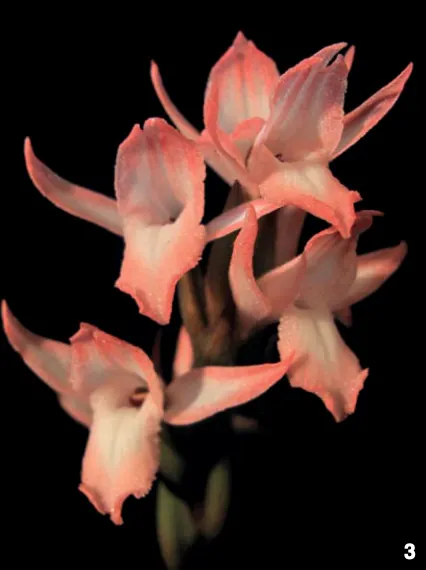
[3] A much pinker flower of Pteroglossa roseoalba.
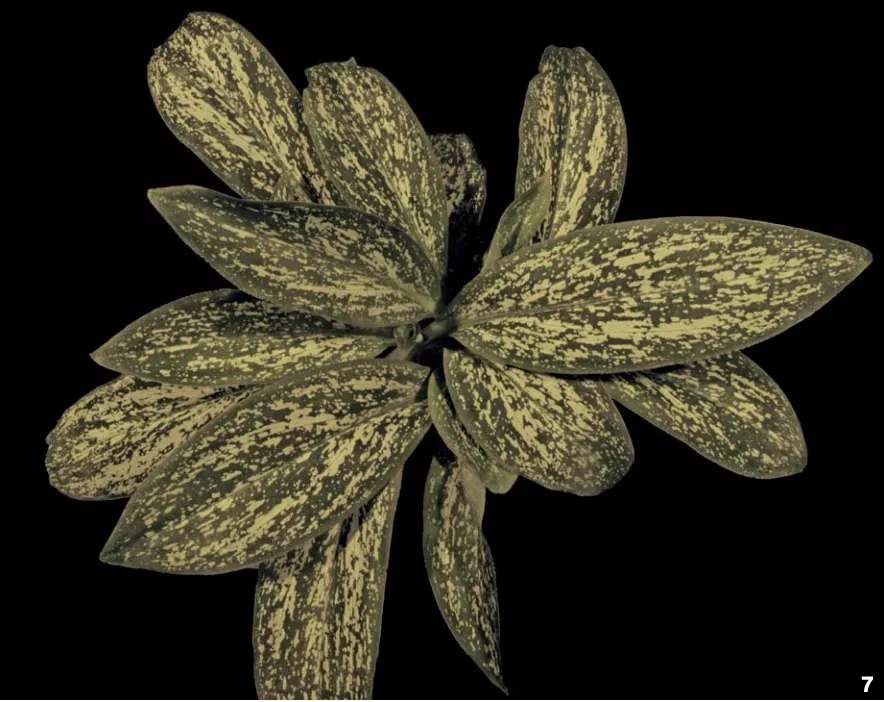
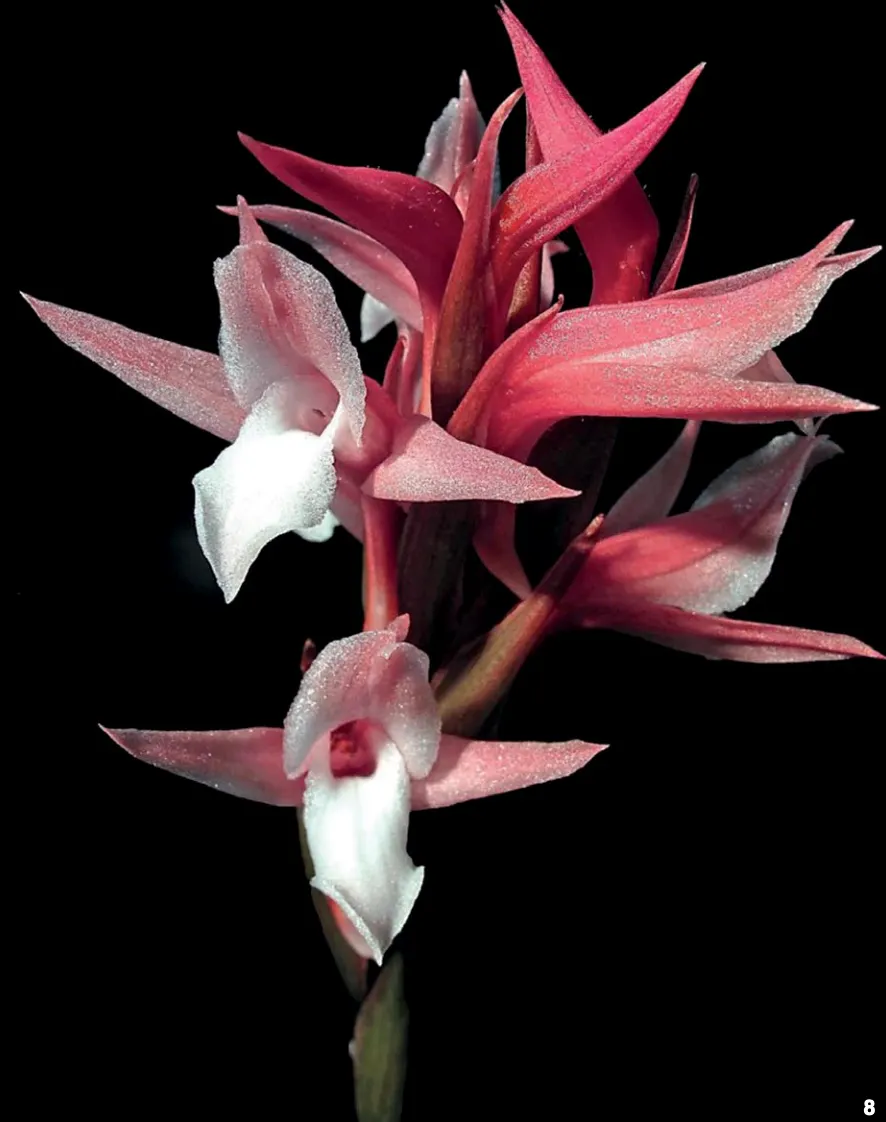
The second hybrid was made by Orchids and More in Germany and registered by A. Della lacovo as Pterorhynchos Graziano Grando in 2019. It was registered as a hybrid of Pteroglossa roseoalba by Stenorrhynchos glicensteinii. The foliage is dark green with fantastic white spotting and streaking. The inflorescence is about 12 inches (30 cm) tall with up to 18 1-inch (2.5 cm) pink and white flowers.
[4] Foliage of Pterolexia Titania (Pelexia olivacea × Pteroglossa roseoalba).
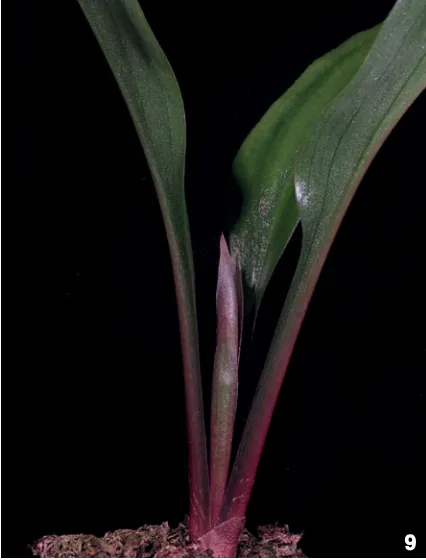
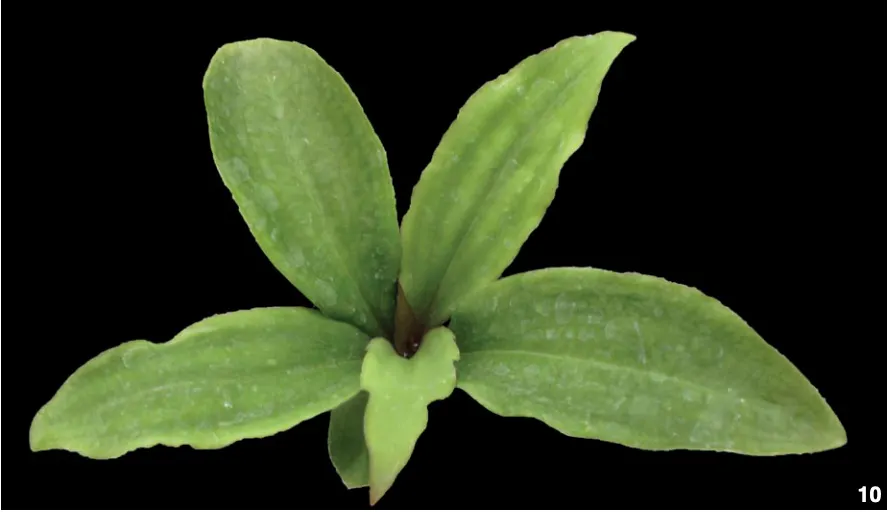
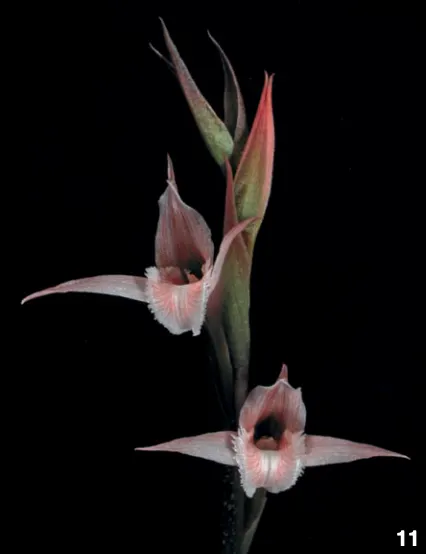
In 2024, Eltroglossa Argentina was registered as a cross of Eltroplectris calcarata with Pteroglossa roseoalba. The leaves have long petioles, some with maroon pigment, like the Eltroplectris. A few leaves may even have some white spotting on them. Having written that they have long petioles, the plants at Longwood Gardens, from the same seed capsule, have compact, rosette-shaped plants. Higher light intensity? I grow mine under lights. The tall inflorescence has numerous 1½- inch (3.8 cm) flowers shaped much like the Eltroplectris with the markings of the Pteroglossa parent.
[5] Inflorescence of Pterolexia Titania.
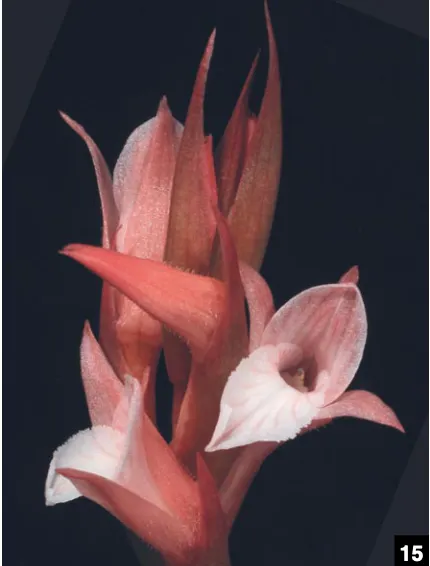
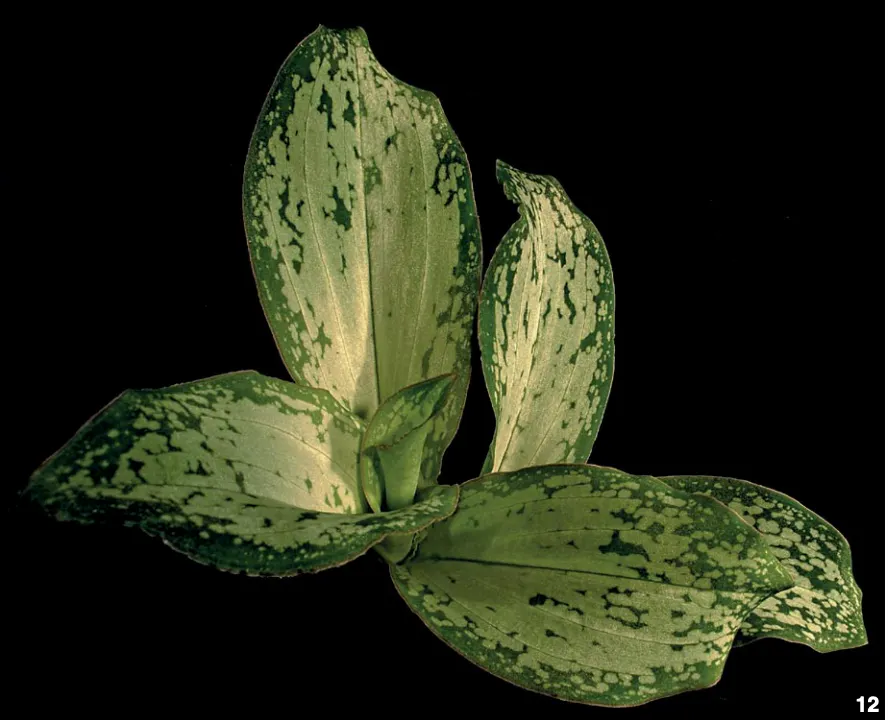
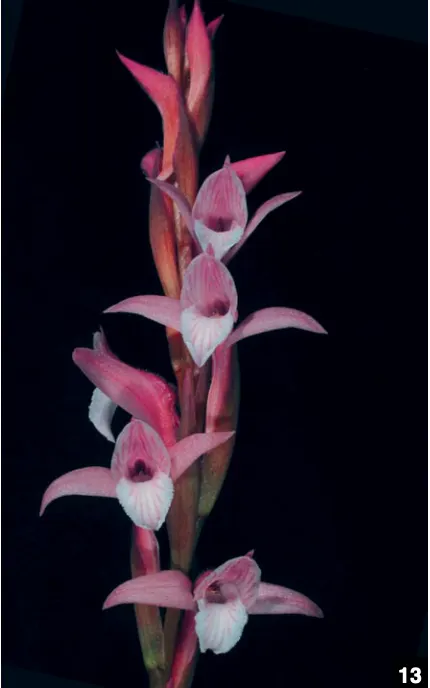
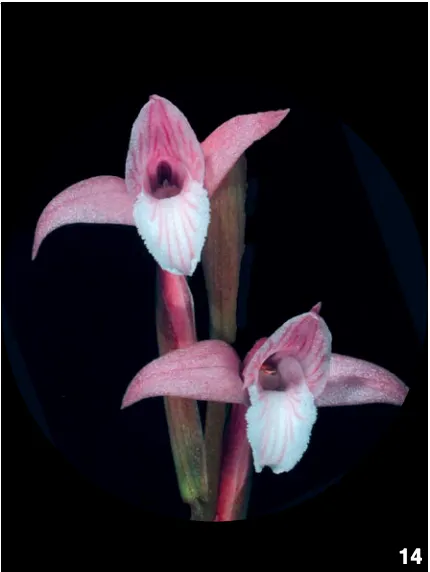
The last hybrid is a back-cross of Pterorhynchos Graziano Grando with Pteroglossa roseoalba, registered in 2025 and named Pterorhynchos Pink Leopard. Once again, the foliage is beautifully and heavily variegated, green and white. As expected, the tall inflorescence has pink and white flowers with some striping from the Pteroglossa parent. The flower is about 1½ inches (3.8 cm) in natural spread.
[6] Flower of Pterolexia Titania.
Unexpectedly, some flowers have also been red and white, again with the striping from the Pteroglossa parent.
From these four hybrids, we can see that Pteroglossa roseoalba has a lot to offer, in itself and for hybridization. All these plants are easy to grow, and those with spectacular foliage are worth growing even out of flower. They want to be kept moist, given Phalaenopsis light levels and intermediate conditions. I grow them in a terrestrial mix. If the plants do go dormant, I cut back on the water until they leaf out again.
There is a great future for this species for those with imagination.
— Leon Glicenstein, PhD is a past chair of the AOS Conservation Committee and an international lecturer. He has grown orchids for more than 66 years and was breeder of novel orchid hybrids for the former Hoosier Orchid Company (email glicenstein33@msn.com).
[7] Foliage of Pterorhynchos Graziano Grando (Pteroglossa roseoalba × Stenorrhynchos glicensteinii).
[8] Flowers of Pterorhynchos Graziano Grando.
[9] Long-petioled leaves of the author’s Eltroglossa Argentina (Eltroplectris cal - carata × Pteroglossa roseoalba).
[10] Rosette of Eltroglossa Argentina grown at Longwood Gardens.
[11] Flowers of Eltroglossa Argentina.
[12] Foliage of Pterorhynchos Pink Leopard ‘Judy’ HCC/AOS (Graziano Grando × Pteroglossa roseoalba).
[13] Inflorescence of Pterorhynchos Pink Leopard ‘Judy’ HCC/AOS.
[14] Pink and white flowers of Pterorhynchos Pink Leopard ‘Judy’ HCC/AOS.
[15] Red and white flowers of Pterorhynchos Pink Leopard.