

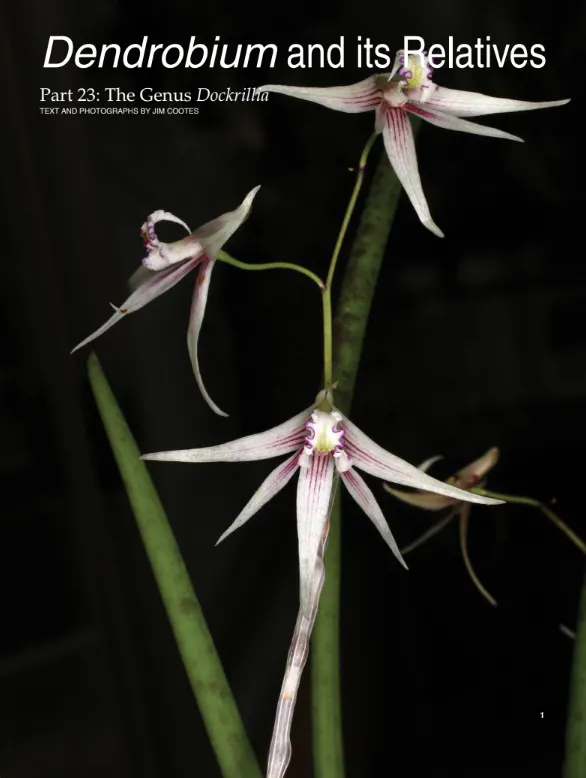
The genus Dockrillia was first proposed by Friedrich Brieger in 1981 in Die Orchideen ihre Beschreibung, Kultur und Zuchtung. (The orchids, their description, culture and breeding). There are about 30 species found in Australia, New Guinea, Indonesia, New Caledonia and some islands of the Pacific Ocean. At present, Plants of the World Online (POWO 2026) accepts Dockrillia as a section of the expanded Dendrobium. The type species for the genus is Dockrillia linguiformis (Sw.) Brieger. The generic name honors Alick Dockrill, an Australian botanist. Dockrillia are easily separated from dendrobiums by their growth habit: the plants have no pseudobulbs, the single leaves are thick and succulent, for most of the species, terete; and the inflorescences appear from near the base of the leaf.
[1] Dockrilllia schoenina
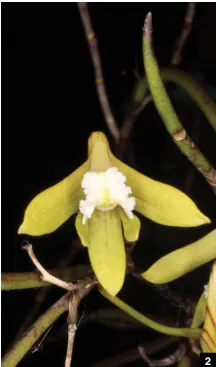
Dockrillia bowmanii
George Bentham named this species as a Dendrobium in 1873. Dr. Mark Clements and David Jones transferred it to Dockrillia, in Lasianthera: The Scientific Journal for the Orchidaceae of Papua New Guinea in 1996. The specific epithet honors Edward Bowman, a collector from Queensland, Australia. The plant is semipendulous with terete leaves about 5 inches (12.5 cm) long. The flowers are about one inch (2.5 cm) in diameter. This species is endemic to northern parts of Australia. It grows as an epiphyte at low elevations.
[2] Dockrilllia bowmanii
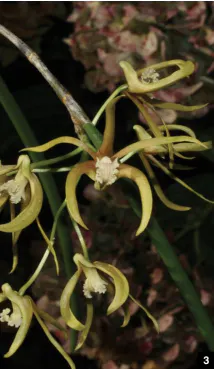
Dockrillia brevicauda
David Jones and Dr. Mark Clements first named this as a Dendrobium in 1994. Dr. Mark Clements and David Jones transferred it to Dockrillia, in Lasianthera, in 1996. The specific epithet refers to a short tail, as in the apex of the labellum. The plant is a pendulous grower with leaves up to 8 inches (20 cm) long. The inflorescence bears up to eight flowers to 13⁄4 inches (4.5 cm) across. This species is endemic to northern Queensland, where it grows both as an epiphyte and lithophyte at elevations between 2,300 and 3,100 feet (700–950 m).
[3] Dockrilllia brevicauda
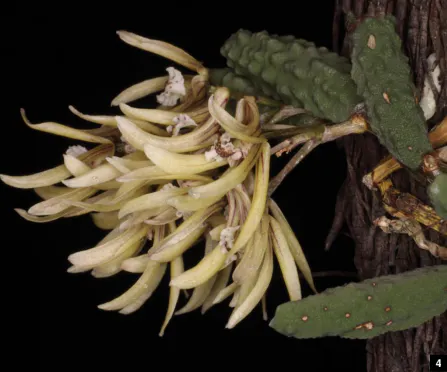
Dockrillia cucumerina
William MacLeay first mentioned this species, but John Lindley described it as a Dendrobium in 1842. Friedrich Brieger transferred it to Dockrillia in 1981 in Zeitschrift für Botanische Taxonomie und Geobotanik (Journal of Botanical Taxonomy and Geobotany). The specific epithet refers to the cucumber-shaped pseudobulbs of this orchid. A creeping plant, with bumpy leaves up to 13⁄8 inches (3.5 cm) long. Inflorescences bear up to six flowers about 3⁄4 of an inch (2 cm) across. This orchid is endemic to New South Wales and Queensland, where it grows as an epiphyte at elevations between 160 and 3,300 feet (50–1,000 m).
[4] Dockrilllia cucumerina
Dockrillia dolichophylla
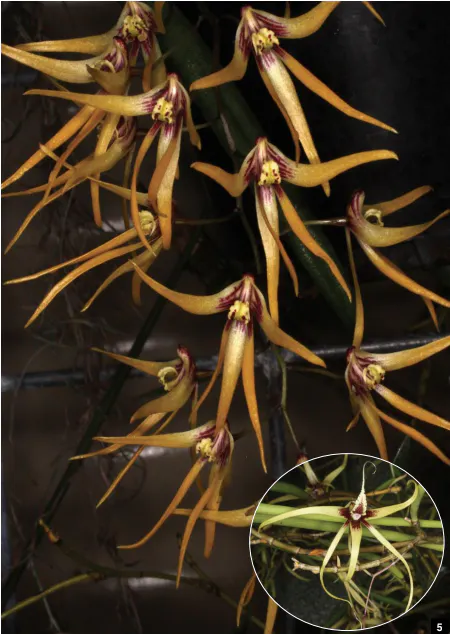
David Jones and Dr. Mark Clements first named this as a Dendrobium in 1989. Dr. Mark Clements and David Jones transferred it to Dockrillia in 1996, in Lasianthera: The Scientific journal for the Orchidaceae of Papua New Guinea. The specific epithet refers to the long leaves of this species. Plants are pendulous growers that can reach 10 feet (3 m) in length. Leaves are up to 3 feet (90 cm) long. Inflorescences bear up to five flowers up to 3 inches (7.5 cm) across. This species is endemic to New South Wales and Queensland, where it grows as an epiphyte at elevations of between 2,300 and 4,000 feet (700–1,200 m).
[5] Two different color forms of Dockrilllia dolichophylla.
Dockrillia fairfaxii
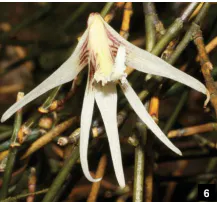
Ferdinand Mueller and Robert Fitzgerald named this as a Dendrobium. Stephan Rauschert transferred it to Dockrillia in 1983 in Fedde’s Repertorium. Zeitschrift für Botanische Taxonomie und Geobotanik (Fedde’s Repertory. Journal of Botanical Taxonomy and Geobotany). The specific epithet honors John Fairfax, a newspaper publisher. Plants are pendulous growers that can reach 10 feet (3 m) in length. Leaves are up to 2 feet (60 cm) long. Inflorescences bear up to six flowers up to 2 inches (5 cm) across. This species is endemic to New South Wales, where it grows as an epiphyte at elevations of between 1,000 and 3,300 feet (300–1,000 m).
[6] Dockrilllia fairfaxii
Dockrillia linguiformis
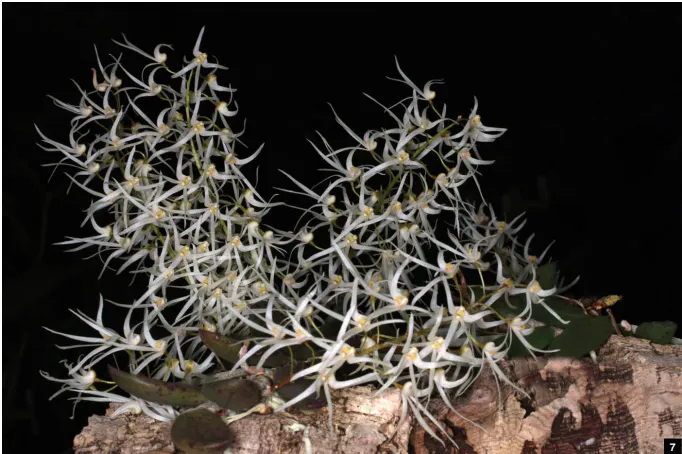
Olof Swartz first named this species as a Dendrobium. Friedrich Brieger transferred it to Dockrillia in 1981 in Zeitschrift für Botanische Taxonomie und Geobotanik (Journal of Botanical Taxonomy and Geobotany). The specific epithet refers to tongue- shaped leaves. The plant is a mat-forming species, with thickened leaves up to 11⁄2 inches (4 cm) long. Inflorescences are up to 4 inches (10 cm) long, bearing at least 20 flowers about 3⁄4 of an inch (2 cm) in diameter. This species is endemic to New South Wales and Queensland, where it grows as both an epiphyte and lithophyte at elevations of up to 3,500 feet (1,050 m).
[7] Dockrilllia linguiformis
Dockrillia nugentii
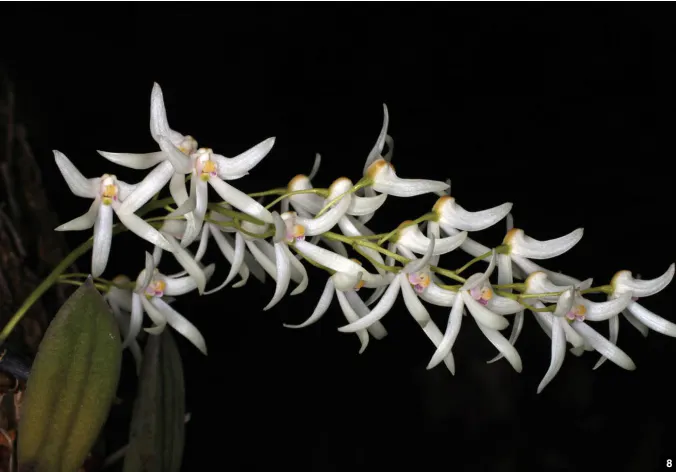
Frederick Bailey first named this species as a Dendrobium. Dr. Mark Clements and David Jones transferred it to Dockrillia in 1996 in Lasianthera: The Scientific Journal for the Orchidaceae of Papua New Guinea. The specific epithet honors Mr. L.J. Nugent, who collected the first plants described. The plant is a mat-forming species, with thickened leaves to 11⁄2 inches (4 cm) long and a surface like sandpaper. Inflorescences are up to 6 inches (15 cm) long, bearing up to 15 flowers about 1⁄2 an inch (1.25 cm) in diameter. This species is endemic to Queensland where it grows as both an epiphyte and lithophyte at elevations between 1,800 feet and 3,300 feet (600–1,000 m).
[8] Dockrilllia nugentii
Dockrillia pugioniformis
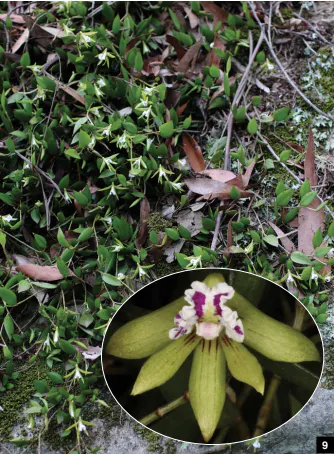
Allan Cunningham first named this species as a Dendrobium. Stephan Rauschert transferred it to Dockrillia in 1983 in Fedde’s Repertorium. Zeitschrift für Botanische Taxonomie und Geobotanik (Fedde’s Repertory. Journal of Botanical Taxonomy and Geobotany). The specific epithet refers to dagger-shaped leaves. The plant is pendulous in its growth habit; leaves can reach 23⁄4 inches (7 cm) in length but are usually much shorter. This species is endemic to New South Wales, where it grows as both an epiphyte and lithophyte at elevations of up to 3,300 feet (1,000 m).
[9] Dockrilllia pugioniformis
Dockrillia rigida
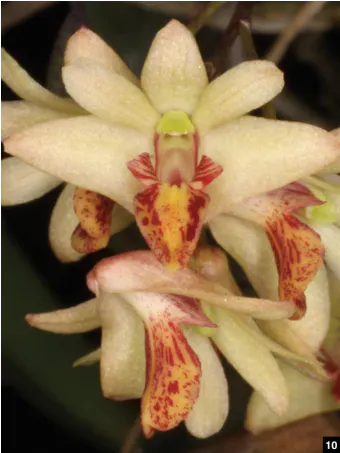
Robert Brown first named this species as a Dendrobium. Stephan Rauschert transferred it to Dockrillia in 1983 in Fedde’s Repertorium. Zeitschrift für Botanische Taxonomie und Geobotanik (Fedde’s Repertory. Journal of Botanical Taxonomy and Geobotany). The specific epithet refers to the rigid foliage. The plant is a pendulous grower, with leaves up to 21⁄2 inches (6 cm) long. The flowers are about 3⁄8 of an inch (1 cm) in diameter. This species is found in northern Queensland, the islands of the Torres Strait and New Guinea. It grows as an epiphyte at low elevations.
[10] Dockrilllia rigida
Dockrillia schoenina
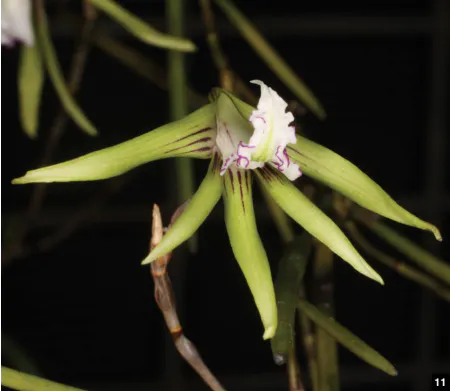
John Lindley first named this species as a Dendrobium. Dr. Mark Clements and David Jones transferred it to Dockrillia in 1996 in Lasianthera: The Scientific Journal for the Orchidaceae of Papua New Guinea. The specific epithet refers to the reed-shaped leaves. The plant is an upright grower, with leaves up to 6 inches (15 cm) in length. The flowers are about 13⁄8 inches (3.5 cm) in diameter. This species is endemic to northern New South Wales and Queensland. It grows as an epiphyte at elevations of around 2,000 feet (600 m).
[11] A green color form of Dockrilllia schoenina.
Dockrillia striolata
Heinrich G. Reichenbach first named this species as a Dendrobium. Stephan Rauschert transferred it to Dockrillia in 1983 in Fedde’s Repertorium. Zeitschrift für Botanische Taxonomie und Geobotanik (Fedde’s Repertory. Journal of Botanical Taxonomy and Geobotany). The specific epithet refers to the slightly striped floral segments. It is a clump-forming plant with leaves up to 4 inches (10 cm) long. Inflorescences are single-flowered, with the blooms about 3⁄4 of an inch (2 cm) across. The species is found in New South Wales, Victoria and Tasmania. It grows as a lithophyte at elevations between sea level and 3,400 feet (0–1,000 m).
Dockrillia striolata subsp. chrysantha
David Jones named this species in 1998 in Australian Orchid Research volume 3. The subspecific epithet refers to the golden yellow flowers. Endemic to the east coast of Tasmania, it grows at elevations up to 750 feet (250 m). The subspecies is similar to the species but differs in the bright yellow flowers, which have no stripes. It is endemic to the east coast of Tasmania where it grows as a lithophyte at elevations between sea level and 200 feet (0–50 m).
[12] Dockrilllia striolata f. chrysantha is an attractive xanthic form.
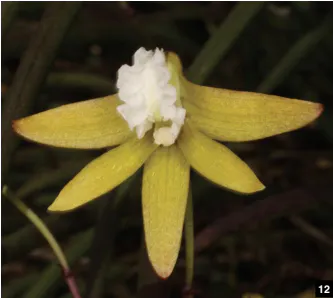
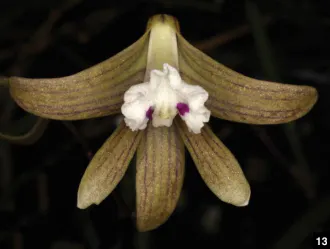
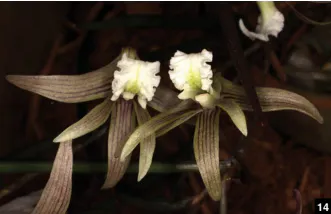
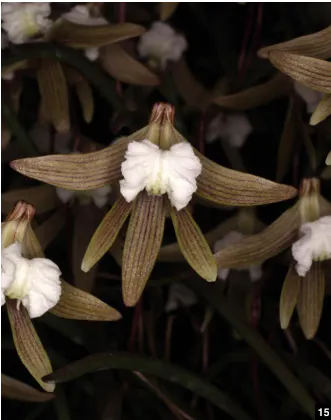
[13–15] In addition to its unusual yellow-colored form, the species is found in a several darker-colored forms.
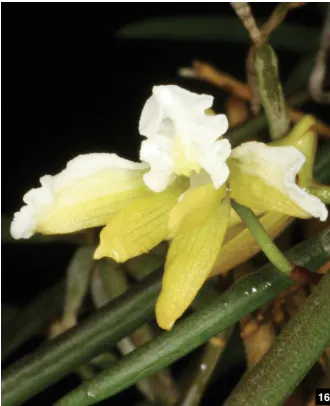
[16] Dockrilllia striolata also occurs in rare peloric forms.
Dockrillia teretifolia
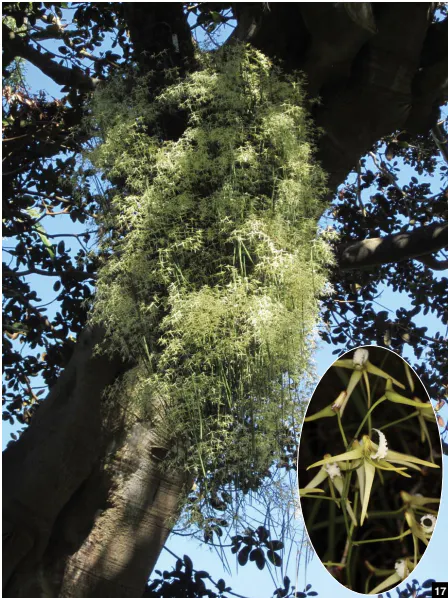
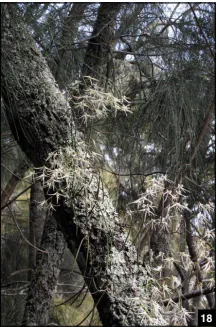
Robert Brown first named this species as a Dendrobium. Friedrich Brieger transferred it to Dockrillia in 1981 in Zeitschrift für Botanische Taxonomie und Geobotanik (Journal of Botanical Taxonomy and Geobotany). The specific epithet refers to the circular cross-section of the leaves. The plant is a pendulous grower and can reach lengths of 61⁄2 feet (2 m). Leaves are up to 18 inches (46 cm) long. Inflorescences can have up to 15 flowers about 11⁄2 inches (4 cm) in diameter. Endemic to New South Wales and Queensland, where it grows as an epiphyte from sea level to 2,500 feet (800 m).
[17] Dockrilllia teretifolia can be found in the wild as very large specimens.
[18] Dockrilllia teretifolia growing in another distinct habitat.
Dockrillia wassellii
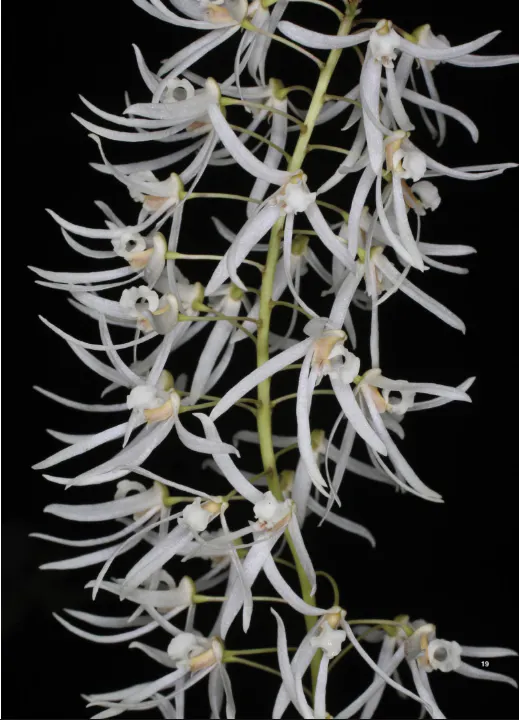
Stanley Blake first named this species as a Dendrobium. Friedrich Brieger transferred it to Dockrillia in 1981 in Zeitschrift für Botanische Taxonomie und Geobotanik (Journal of Botanical Taxonomy and Geobotany). The specific epithet honors Mr. J.L. Wassell, collector of the first plants described. The plant is an upright grower with leaves up to 4 inches (10 cm) long. The inflorescence is erect, to 8 inches (20 cm) long, bearing many flowers to about 1⁄2 an inch (1.2 cm) in diameter. This species is endemic to northern Queensland, where it grows mainly as an epiphyte, and occasionally on rocks, at elevations of between 400 and 1,600 feet (100–400 m).
[19] Dockrilllia wassellii
Further Reading
Adams P.B. 2015. A Guide to Dendrobium of Australia. Natural History Publications (Borneo).
Dockrill A.W. 1992. Australian Indigenous Orchids, volume 2. Surrey Beatty & Sons Pty. Ltd., Chipping Norton, New South Wales, Australia.
Jones D.L. 2024. A Complete Guide to Australian Native Orchids. Revised Third Edition. Reed New Holland Publishers, Sydney, Australia.