

Carl Blume proposed this as a genus in 1825, in Bijdragen tot de Flora van Nederlandsch Indie (Contributions to the Flora of the Dutch Indies). The group is currently accepted as a section of the expanded Dendrobium, although many still consider it distinct. The name refers to the resemblance of some of the species to members of the genus Aloe. The type species for the genus was Aporum lobatum Blume (now Den. lobatum (Blume) Miq.). These species can easily be separated from other sections of Dendrobium by several features: the habit of the foliage of the plant, which is mainly succulent and remains permanently on the plant; in some species, the flowers appear in clusters at the end of a lengthened stem, or they can appear singly or in pairs.
DENDROBIUM ALOIFOLIUM
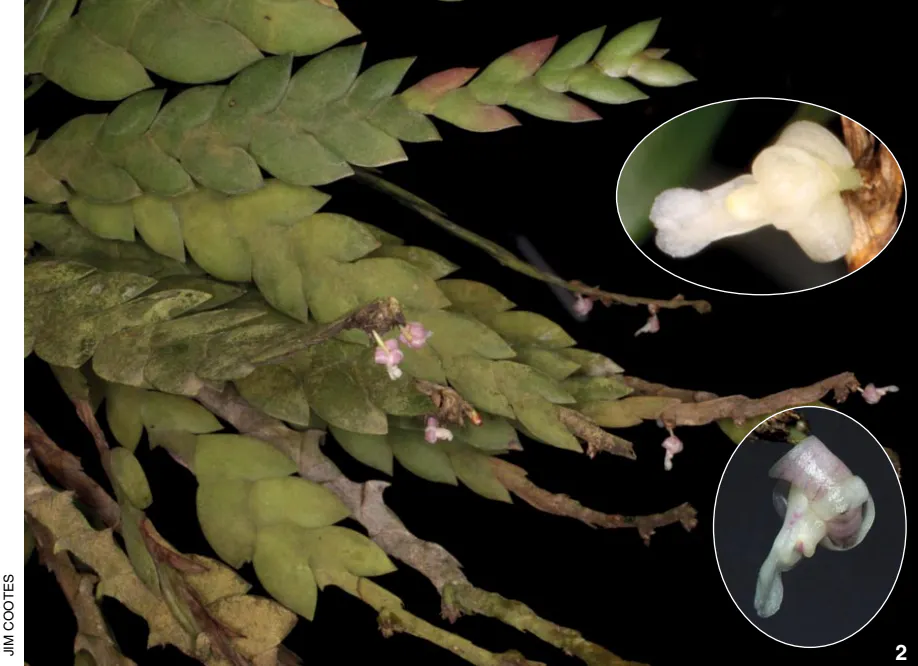
Carl Blume first named this species in 1825 as a Macrostomium aloifolium. Reichenbach filius transferred it to the genus Dendrobium in 1861 and then by Friedrich Brieger to the genus Aporum in 1981, in Die Orchideen ihre Beschreibung, Kultur und Zuchtung (The Orchids: Their Description, Culture and Breeding). The specific epithet refers to the foliage, which resembles some Aloe species. Plants reach lengths of 1 foot (30 cm). Flowers appear from along the stem and are about 3/16 of an inch (4 mm) in diameter. The floral segments reflex. This species is widely distributed throughout Southeast Asia. It grows as an epiphyte at elevations up to 2,000 feet (600 m).
DENDROBIUM BILOBULATUM
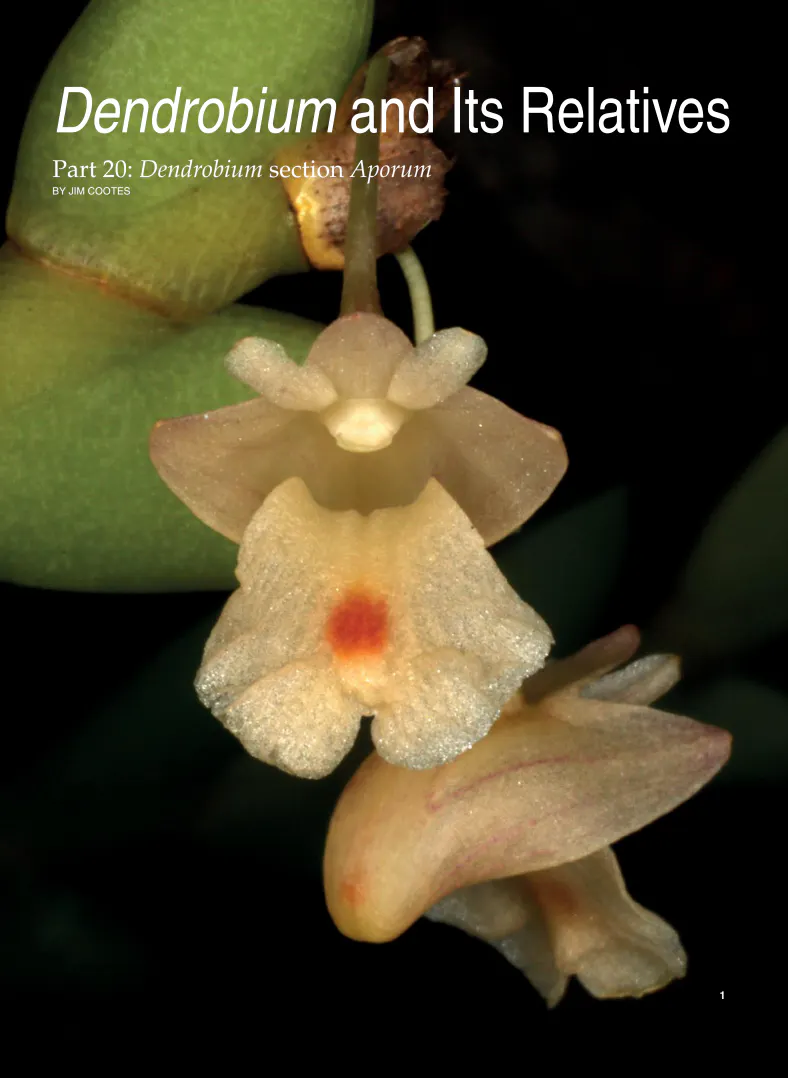
Gunnar Seidenfaden first named this species in 1985. Mark A. Clements transferred it to the genus Aporum in 2003, in Telopea (the scientific journal of the New South Wales [Australia] Herbarium). The specific epithet refers to the bilobed labellum. Plants can reach 18 inches (45 cm) in height. Flowers are 3⁄8 (1 cm) across and appear singly. This species is only known from southern Thailand and Vietnam. It grows as an epiphyte at elevations of around 3,000 feet (910 m).
[1] Dendrobium bilobulatum
[2] Dendrobium aloifolium; upper insert of a pure white form by Jim Cootes; lower insert by Ronny Boos.
DENDROBIUM CUNEATUM
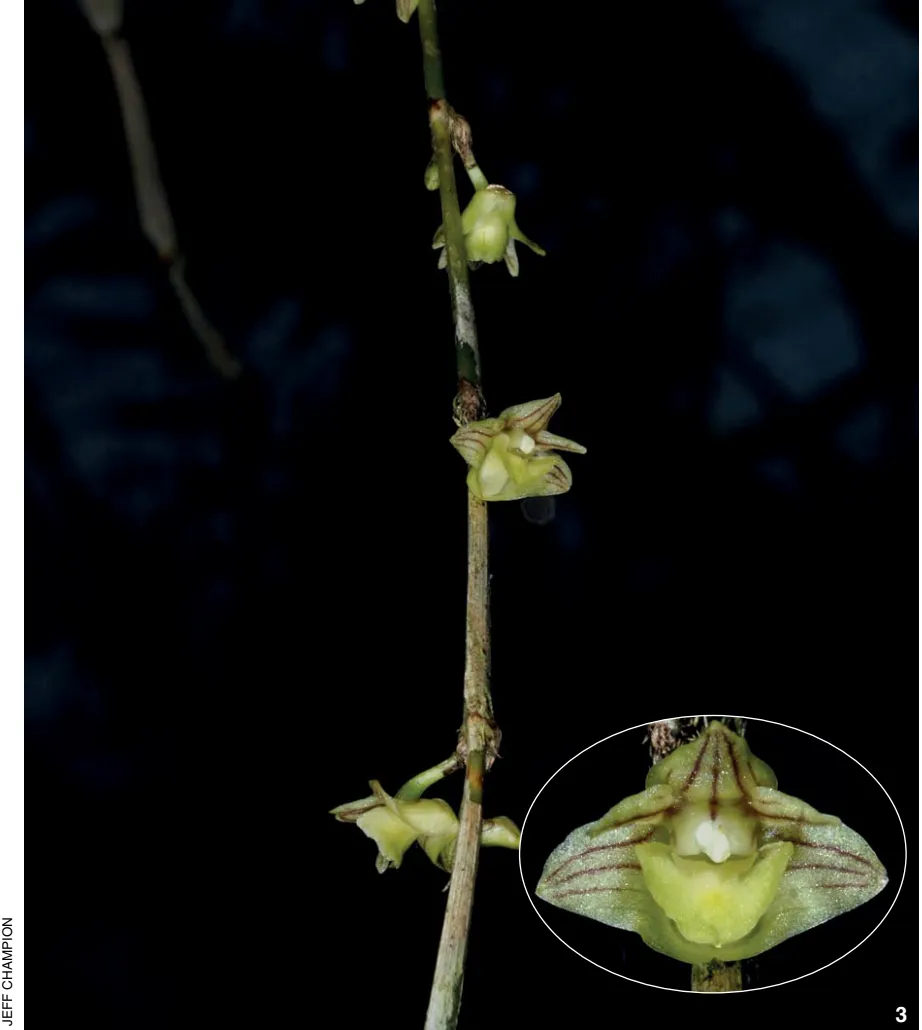
Rudolf Schlechter first named this species in 1906. Stephan Rauschert transferred it to the genus Aporum in 1983 in Feddes Repertorium (Fedde’s Repertory). The specific epithet may refer to the lateral sepals. Plants reach 2 feet (60 cm) in height. Flowers are about 3⁄8 inch (1 cm) across and appear in pairs. This species is only known from the Moluccan Islands of Indonesia. It grows as an epiphyte at low elevations.
[3] Dendrobium cuneatum
DENDROBIUM CURVIFLORUM
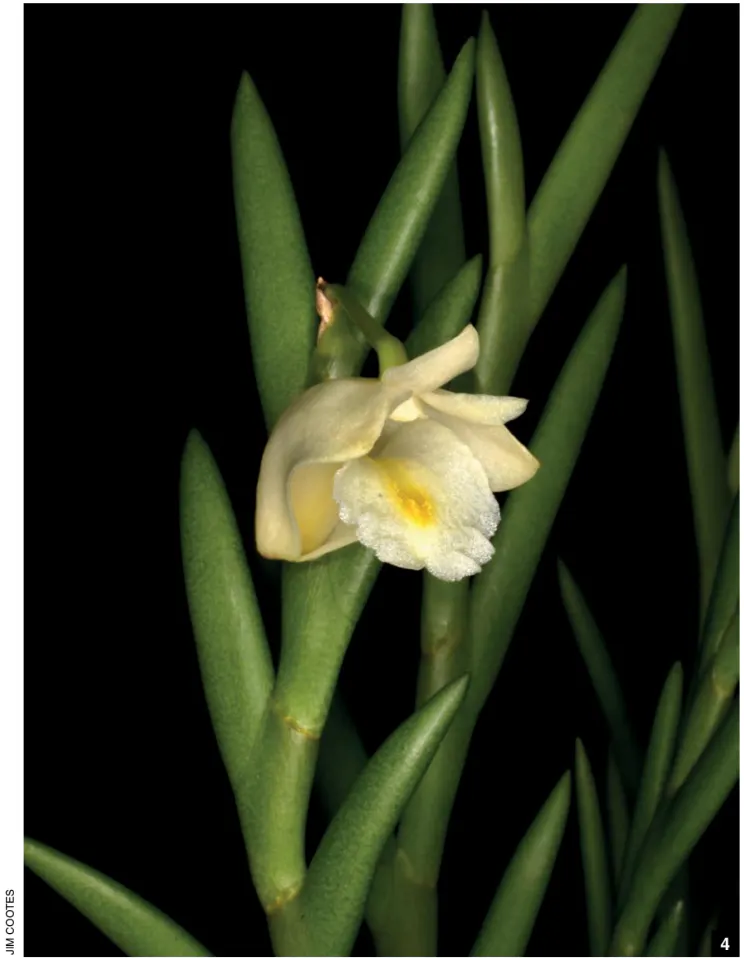
Robert Rolfe first named this species in 1895. Mark A. Clements transferred it to the genus Aporum in 2003 in Telopea (the scientific journal of the New South Wales [Australia] Herbarium). The specific epithet may refer to the curved spur. Plants reach about 1 foot tall (30 cm). Flowers are 11⁄4 inches (3 cm) across. This species is only known from Myanmar. It grows as an epiphyte at elevations of about 4,000 feet (1,200 m).
[4] Dendrobium curviflorum
DENDROBIUM DISTICHUM
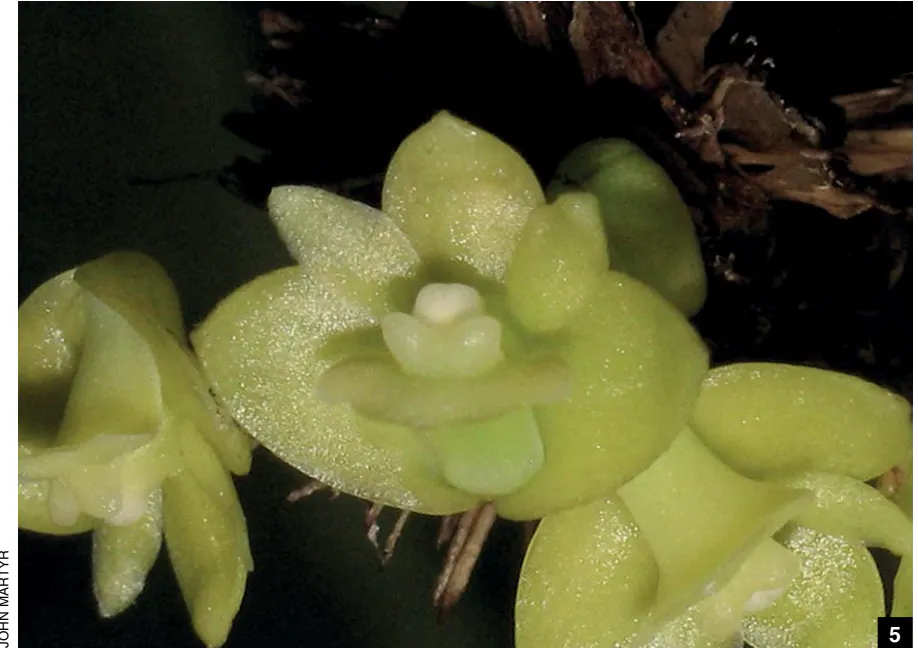
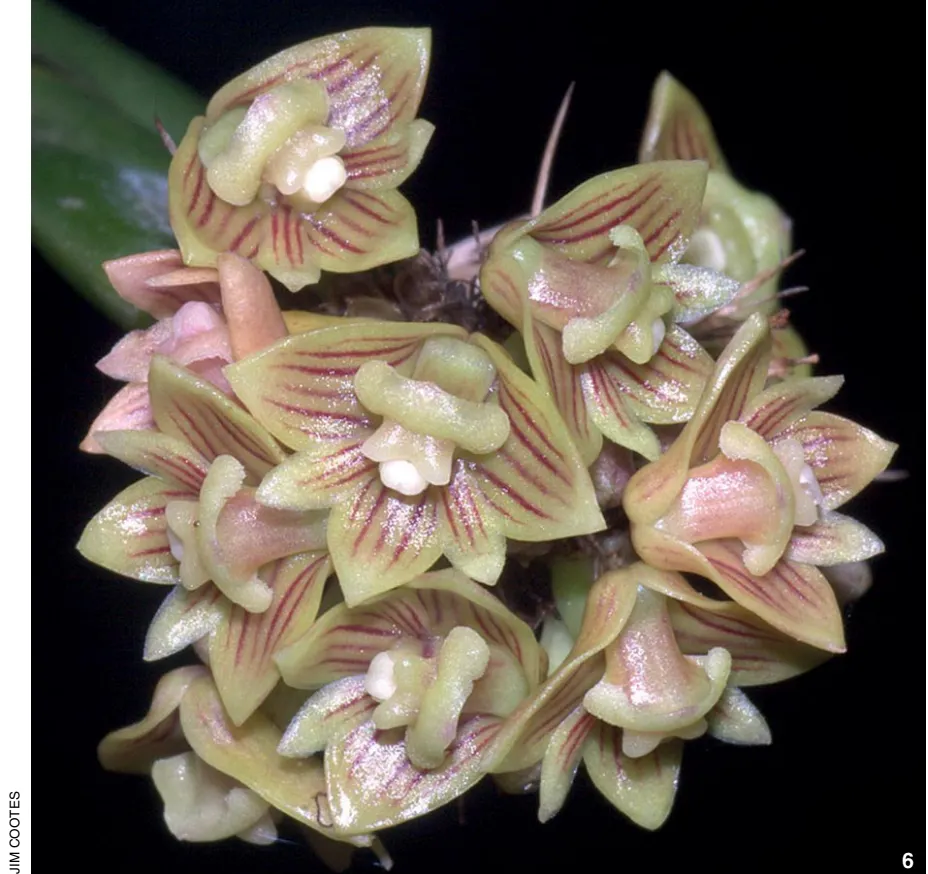
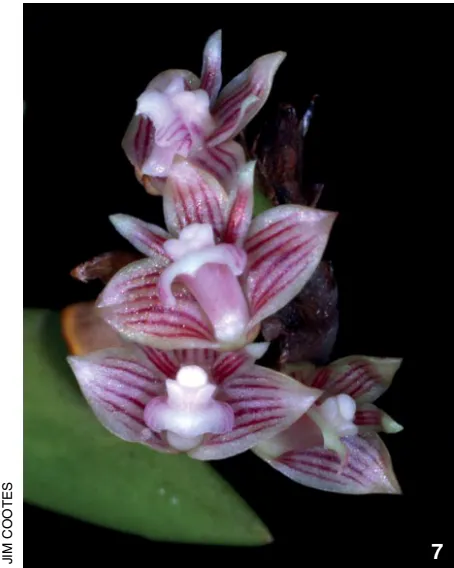
Karel Presl first named this species as a Schizmoceras in 1827. Stephan Rauschert transferred it to the genus Aporum in 1983 in Feddes Repertorium (Fedde’s Repertory). The specific epithet refers to the arrangement of the leaves. Plants can reach 16 inches (40 cm) in length. Flowers appear from the tip of the stem in clusters and are about 1⁄4 inch (6 mm) in diameter. There is a form of this species without the red striping named f. pallidum. This species is endemic to the Philippines. It grows as an epiphyte at elevations up to 3,000 feet (910 m).
[5] A pure yellow-green form of Dendrobium distichum.
[6] A red-striped form of Dendrobium distichum.
[7] When the flower base color is white, red-striped forms can be stunning.
DENDROBIUM KEITHII
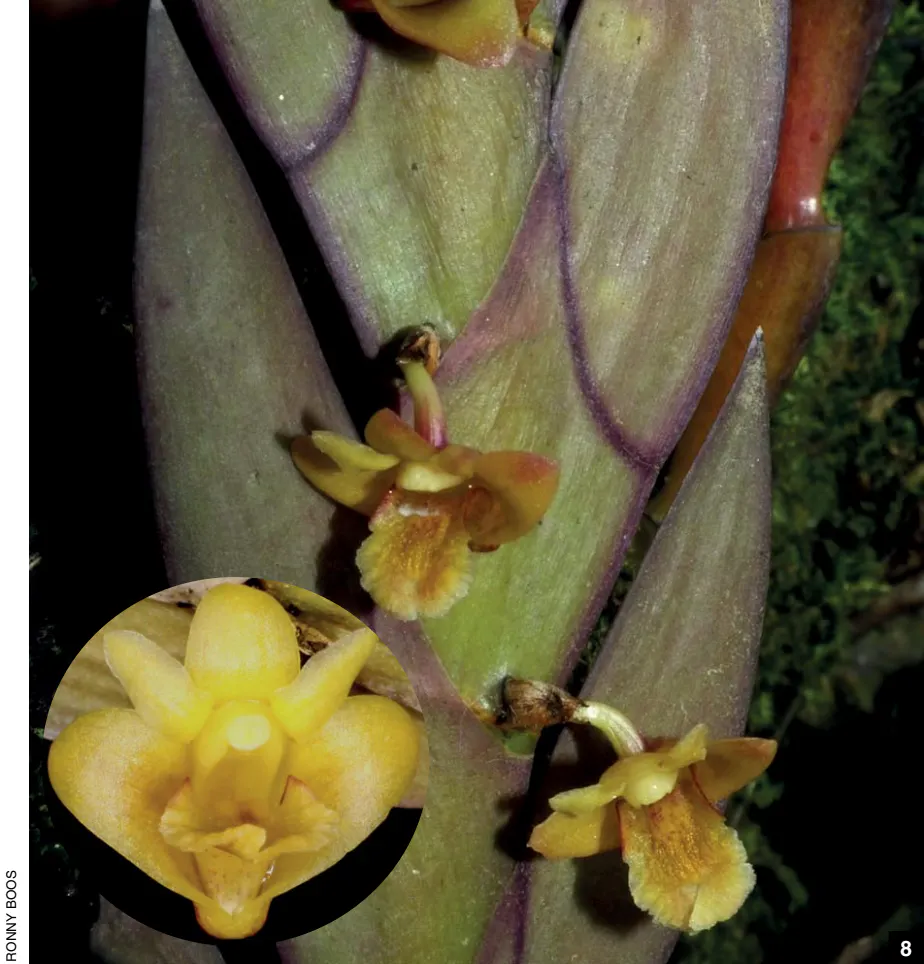
Henry Ridley first named this species in 1896. Mark A. Clements transferred it to the genus Aporum in 2003 in Telopea (the scientific journal of the New South Wales [Australia] Herbarium). The specific epithet honors a Dr. Keith, who found the specimens used for the first description. Plants reach 16 inches (40 cm) in length. Flowers are about 3⁄8 inch (1 cm) across and appear from the leaf axils. This species is endemic to Thailand. It grows as an epiphyte at elevations up to 3,000 feet (910 m).
[8] Dendrobium keithii; close-up inset by the author.
DENDROBIUM LEONI
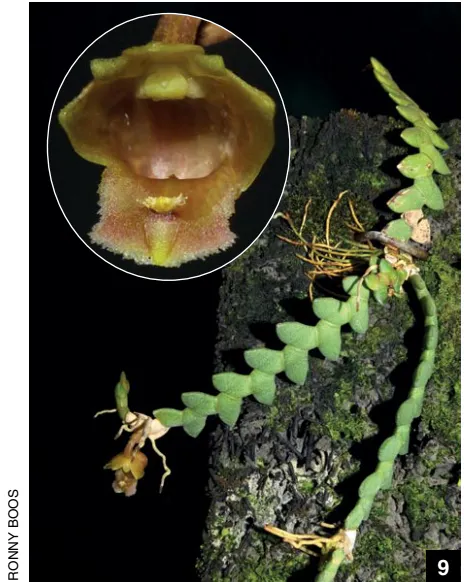
S John Lindley named this species in 1840 in Edwards’s Botanical Register. Reichenbach filius transferred it to the genus Dendrobium in 1861. The specific epithet alludes to the flower’s appearance of a lion with its mouth open! Plants are up to 10 inches (25 cm) tall. Flowers are up to 3⁄4 of an inch (2 cm) across. This species is widely distributed throughout Southeast Asia. It grows as an epiphyte at elevations up to 4,750 feet (1,450 m).
[9] Dendrobium leonis
DENDROBIUM LOBATUM
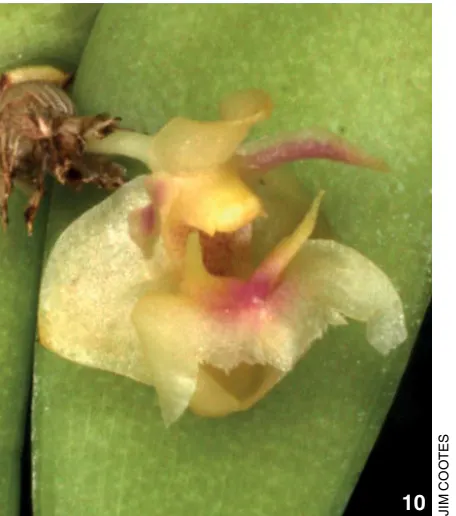
Carl Blume named this species in 1825 in Bijdragen tot de Flora van Nederlandsch Indie (Contributions to the Flora of the Dutch Indies) and transferred to Dendrobium in 1859. The specific epithet refers to the lobes of the labellum. Plants are up to 40 inches (1 m) in length. Flowers are about 3⁄8 inch (1 cm) across and appear along the stem. This species has been recorded from Sumatra, Java, Borneo and Malaysia. It grows as an epiphyte at elevations up to 2,450 feet (750 m).
[10] Dendrobium lobatum
DENDROBIUM LOBULATUM
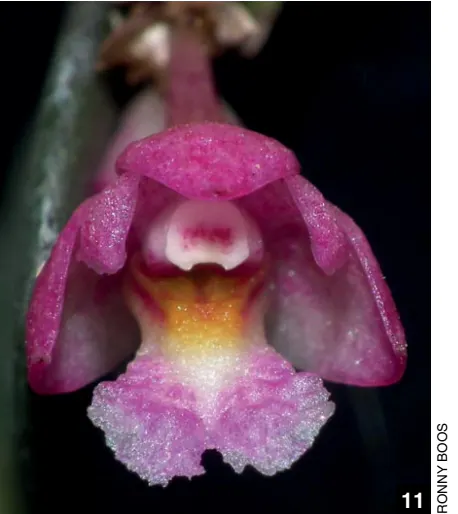
Robert Rolfe and Johannes J. Smith first named this species in 1905. Friedrich Brieger transferred it to the genus Aporum in 1981 in Die Orchideen ihre Beschreibung, Kultur und Zuchtung (The Orchids: Their Description, Culture and Breeding). The specific epithet may refer to the lobes of the labellum. Plants are about 18 inches (45 cm) tall. Flowers are about 1⁄4 inch (6 mm) across. This species is found in Borneo, Java and Sumatra. It grows as an epiphyte at elevations of between 1,650 and 3,300 feet (500–1,000 m).
[11] Dendrobium lobulatum
DENDROBIUM LUNATUM
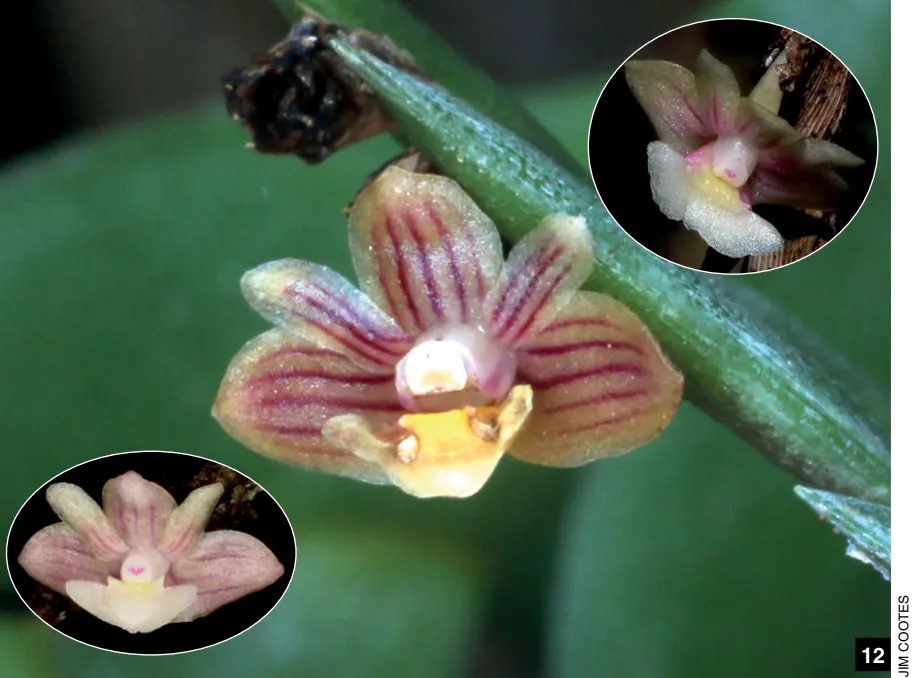
John Lindley first named this species in 1858. Mark A. Clements transferred it to the genus Aporum in 2003 in Telopea (the scientific journal of the New South Wales [Australia] Herbarium). The specific epithet refers to the half-moon-shaped labellum. Plants can reach 1 foot (30 cm) in length. Flowers are about 1⁄4 inch (6 mm) across. This species is endemic to the Philippines. It grows as an epiphyte at elevations up to 1,650 feet (500 m).
[12] Dendrobium lunatum; left inset of a much paler form; right inset by Ronny Boos clearly shows the half-moon shape of the labellum midlobe.
DENDROBIUM MARIVELENSE
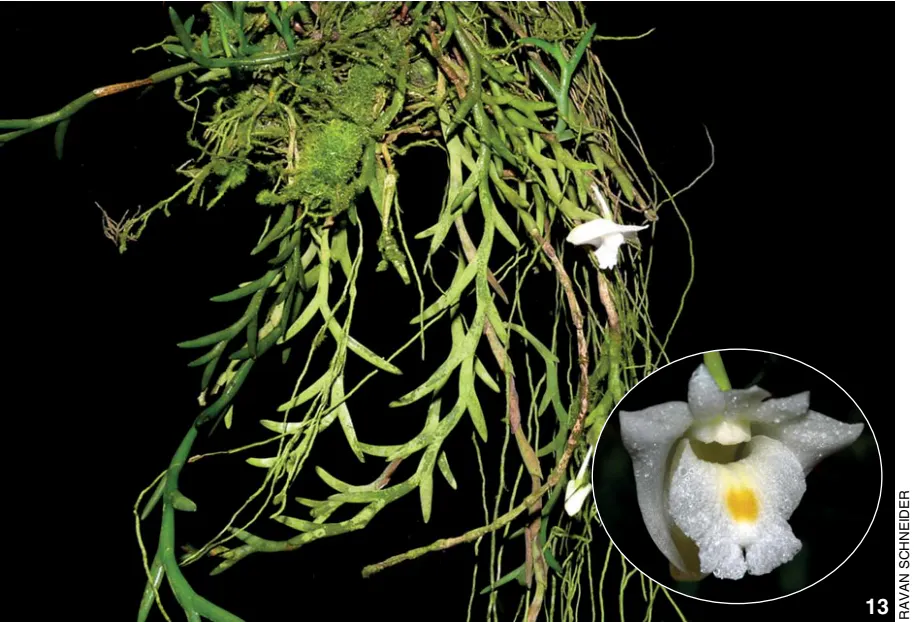
Oakes Ames first named this species as a Dendrobium in 1908. Stephan Rauschert transferred it to the genus Aporum in 1983 in Feddes Repertorium (Fedde’s Repertory). The specific epithet refers to Mount Mariveles, in Bataan province, Luzon, the Philippines. Plants reach 10 inches (25 cm) in height. Flowers appear singly and are about 1 inch (2.5 cm) across. This species is endemic to the Philippines. It grows as an epiphyte at elevations of about 3,000 feet (950 m).
[13] Dendrobium marivelense
DENDROBIUM MERRILLII
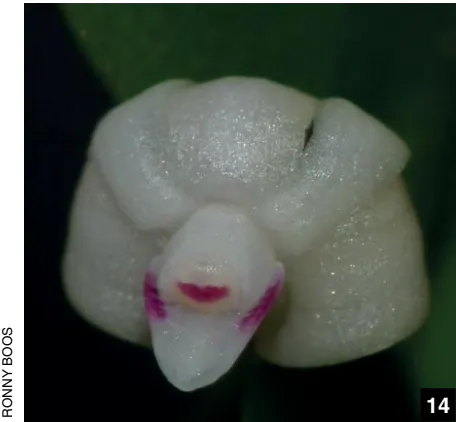
Oakes Ames first named this species as a Dendrobium in 1908. Mark A. Clements transferred it to the genus Aporum in 2003 in Telopea (the scientific journal of the New South Wales [Australia] Herbarium). The specific epithet honors Dr. Elmer D. Merrill, a botanist with the Philippine Bureau of Agriculture. Plants reach 18 inches (50 cm) in length. Flowers are about 1⁄4 inch (6 mm) across. This species is endemic to the Philippines. It grows as an epiphyte at elevations up to 1,200 feet (360 m).
[14] Dendrobium merrillii
DENDROBIUM MINDANAENSE
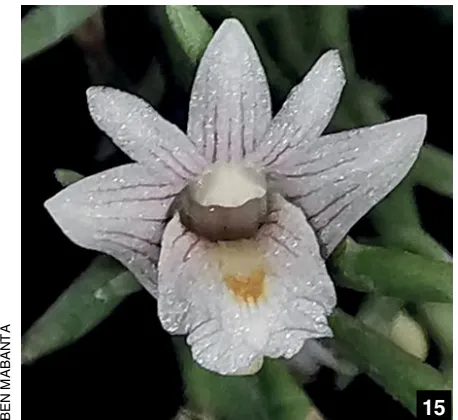
Oakes Ames first named this species as a Dendrobium in 1913. Mark A. Clements transferred it to the genus Aporum in 2003 in Telopea (the scientific journal of the New South Wales [Australia] Herbarium). The specific epithet refers to the second largest island in the Philippine archipelago, Mindanao. Plants reach 18 inches (50 cm) in length. Flowers are about 3⁄8 inch (1 cm) across. This species is endemic to the Philippines. It grows as an epiphyte at low elevations.
[15] Dendrobium mindanaense
DENDROBIUM NATHANIELIS
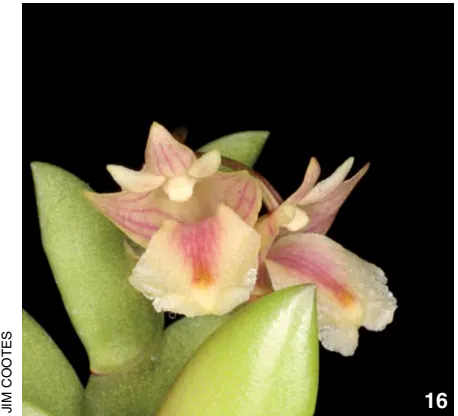
Heinrich G. Reichenbach f. first named this species in 1857. Mark A. Clements transferred it to the genus Aporum in 2003 in Telopea (the scientific journal of the New South Wales [Australia] Herbarium). The specific epithet honors Nathaniel Wallich, collector of the first plants described. Plants reach 10 inches (25 cm) in length. Flowers are about 3⁄8 inch (1 cm) across and are produced in clusters. This species is found in India, Myanmar, Thailand, Laos, Cambodia and Vietnam. It grows as an epiphyte at elevations of about 600 feet (180 m).
[16] Dendrobium nathanielis
DENDROBIUM UNCATUM
John Lindley first named this species in 1858. Friedrich Brieger transferred it to the genus Aporum in 1981 in Die Orchideen ihre Beschreibung, Kultur und Zuchtung (The Orchids: Their Description, Culture and Breeding). The specific epithet refers to a feature of the foliage. Plants reach 10 inches (25 cm) in length. Flowers are about 3⁄4 of an inch (2 cm) across. This species is found in Java and Borneo. It grows as an epiphyte at elevations of between 650 and 4,600 feet (200–1,400 m).
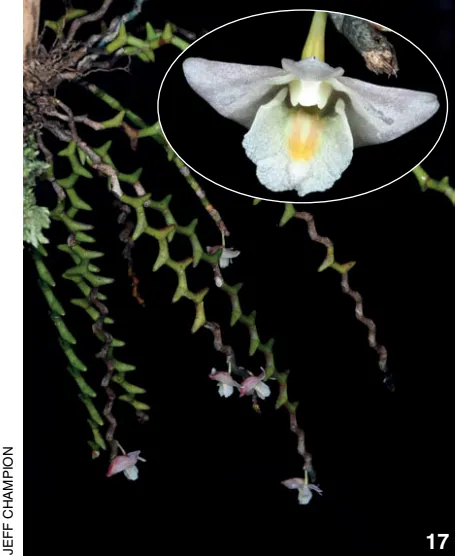
[17] Dendrobium uncatum
DENDROBIUM WENZELII
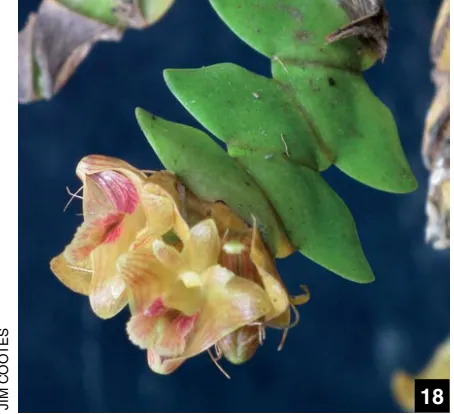
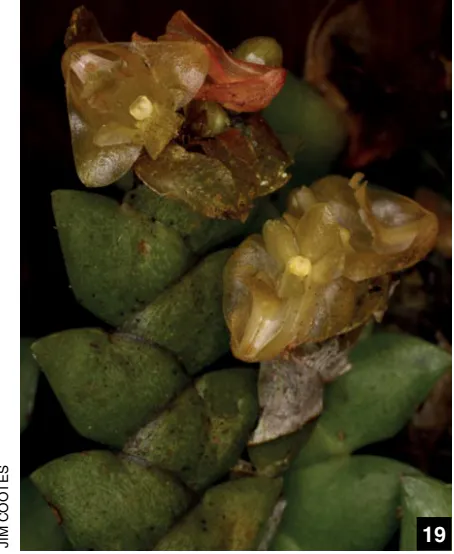
Oakes Ames first named this species as a Dendrobium in 1915. Mark A. Clements transferred it to the genus Aporum in 2003 in Telopea (the scientific journal of the New South Wales [Australia] Herbarium). The specific epithet honors the collector of the first plants, Mr. C.A. Wenzel. Plants reach 4 inches (10 cm) in height. Flowers are about 3⁄8 inch (1 cm) across and appear from orange bracts at the apex of the plant. This species is endemic to the Philippines. It grows as an epiphyte at low elevations.
[18–19] Two color forms of Dendrobium wenzelii.
Acknowledgements
My sincere thanks to Ronny Boos (Philippines), Jeff Champion (Bali, Indonesia), Ben Mabanta (Philippines), Dr. John Martyr (Philippines) and Ravan Schneider (Germany) for the use of their pictures to help enhance this article.
Further Reading
Baker M.L. and C.O. Baker. 1996. Orchid Species Culture Dendrobium. Timber Press, Portland, Oregon.
Lavarack P.S., W. Harris and G. Stocker. 2000. Dendrobium and its Relatives. Kangaroo Press, Nashville,Tennessee.
— Jim Cootes has grown orchids for almost 50 years. He specializes in species orchids of Australia and Asia, particularly those of the Philippines. Mr. Cootes has written three books on Philippines orchid species and has also written countless articles, both scientific and of a more general nature that have been published worldwide. He lives in Sydney, Australia, where he keeps a small collection of orchids (email jimcootes@gmail.com).