

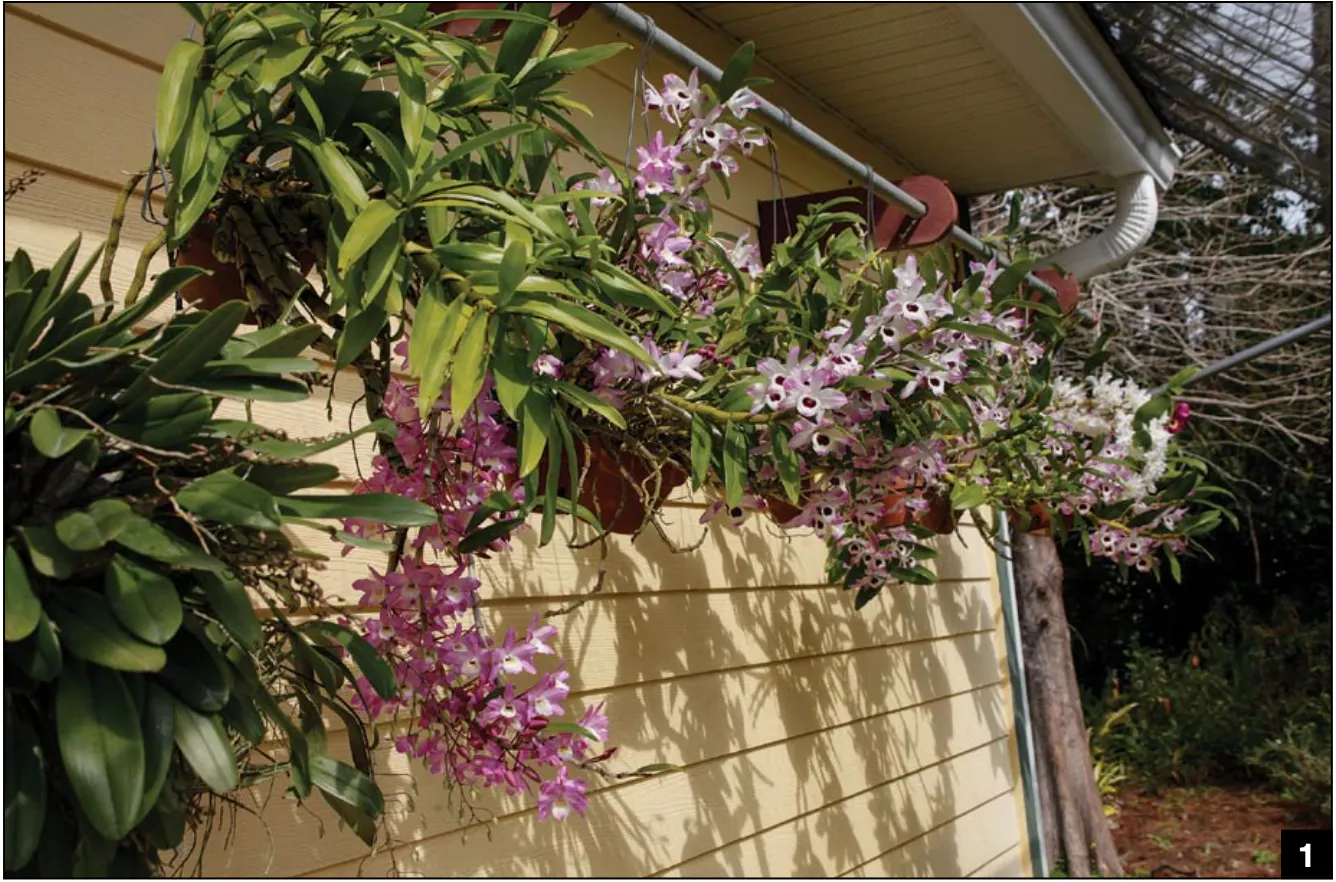
The importance of fresh air to orchids is possibly the least appreciated aspect of growing orchids. All the orchid books tell you to ensure there is air movement around your orchids. For years, I kept adding fans to my growing area, thinking I was satisfying this basic requirement. But orchids do not want recirculated stale air; they want to be bathed in fresh air, particularly the wafting breezes they get when they are outdoors.
The first time Ruben Sauleda of Ruben in Orchids talked to our orchid club, we talked about how I could improve my orchid growing. At that time, we had the traditional greenhouse with a wet wall at one end, exhaust fans at the opposite end, and polypropylene covering all the other surfaces. Ruben took one look at the greenhouse and said, “Rip out the water wall and replace the side wall with stucco metal lath, keep the vents open at either end of the greenhouse and open the top vent.” This allowed free movement of air throughout the greenhouse during the growing season. A retractable curtain closes off the stucco metal lath during cold weather, but otherwise, the plants are always bathed in fresh air. That was the year the greenhouse exploded with new growth and an incredible display of blooms.
[1] If you can find a suitable location outdoors to grow your orchids during the warm season, they will grow like mad and you will be rewarded with a plethora of flowers during their blooming season
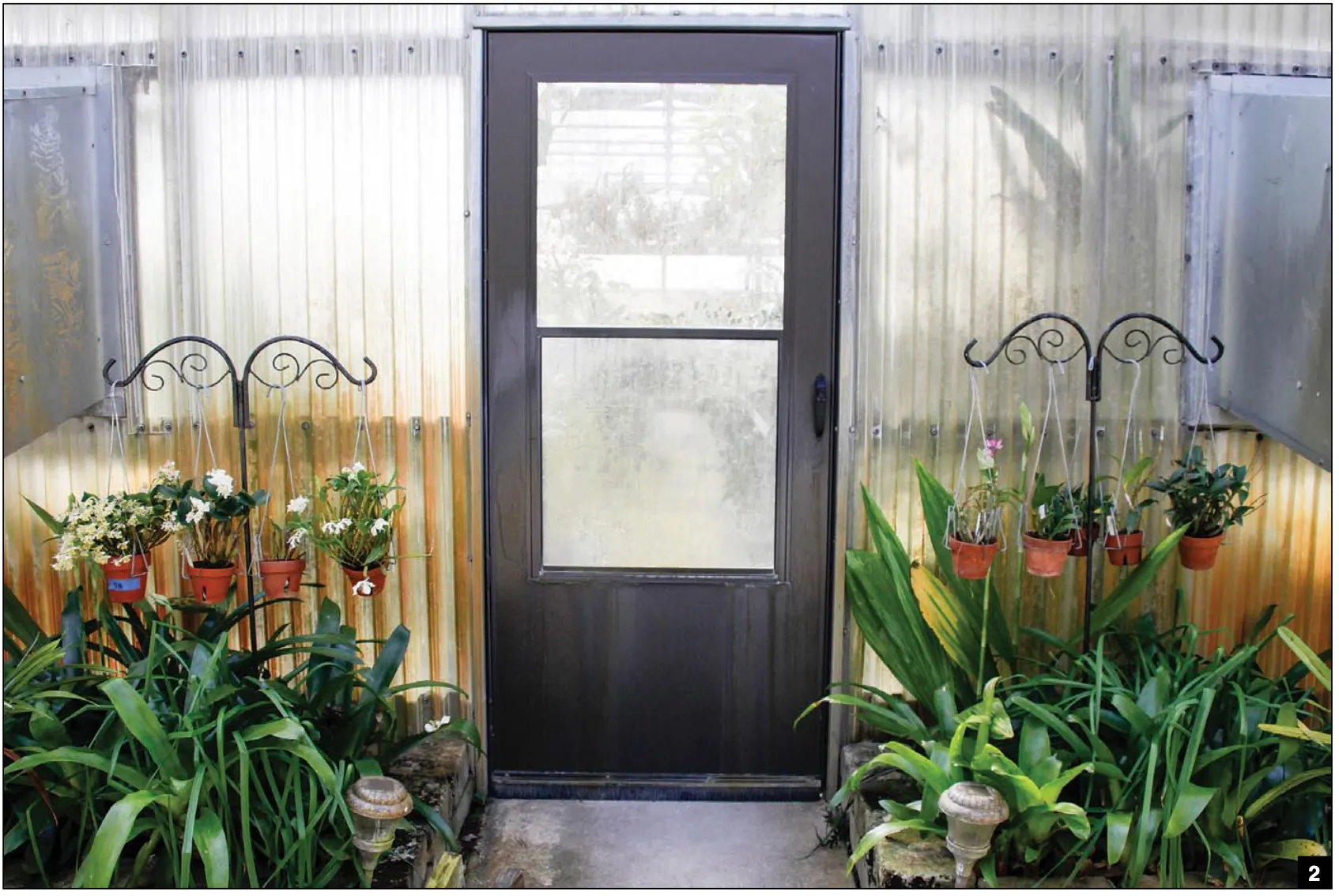
I struggled trying to grow vandas in the hoop house covered with greenhouse film with doors at either end. When Rafael Romero of Plantio La Orquidea looked at our growing setup, he told us to rip out the film on the side wall and replace it with stucco metal lath, and a retractable curtain. Voilà, the vandas bloomed freely, and the incidence of leaf spotting and rots was greatly diminished. During the summer growing season, the vandas are now all moved out into summer shade structures that allow free air movement on all four sides. The vandas grow like weeds in the fresh breezes.
This demand for fresh air makes sense if you think about how many orchids evolved from understory terrestrials to epiphytes. Many types of orchids left the forest floor to grow high in the canopy on the trunks or branches of tall forest trees, where more light was available and where winds were stronger than on the ground.
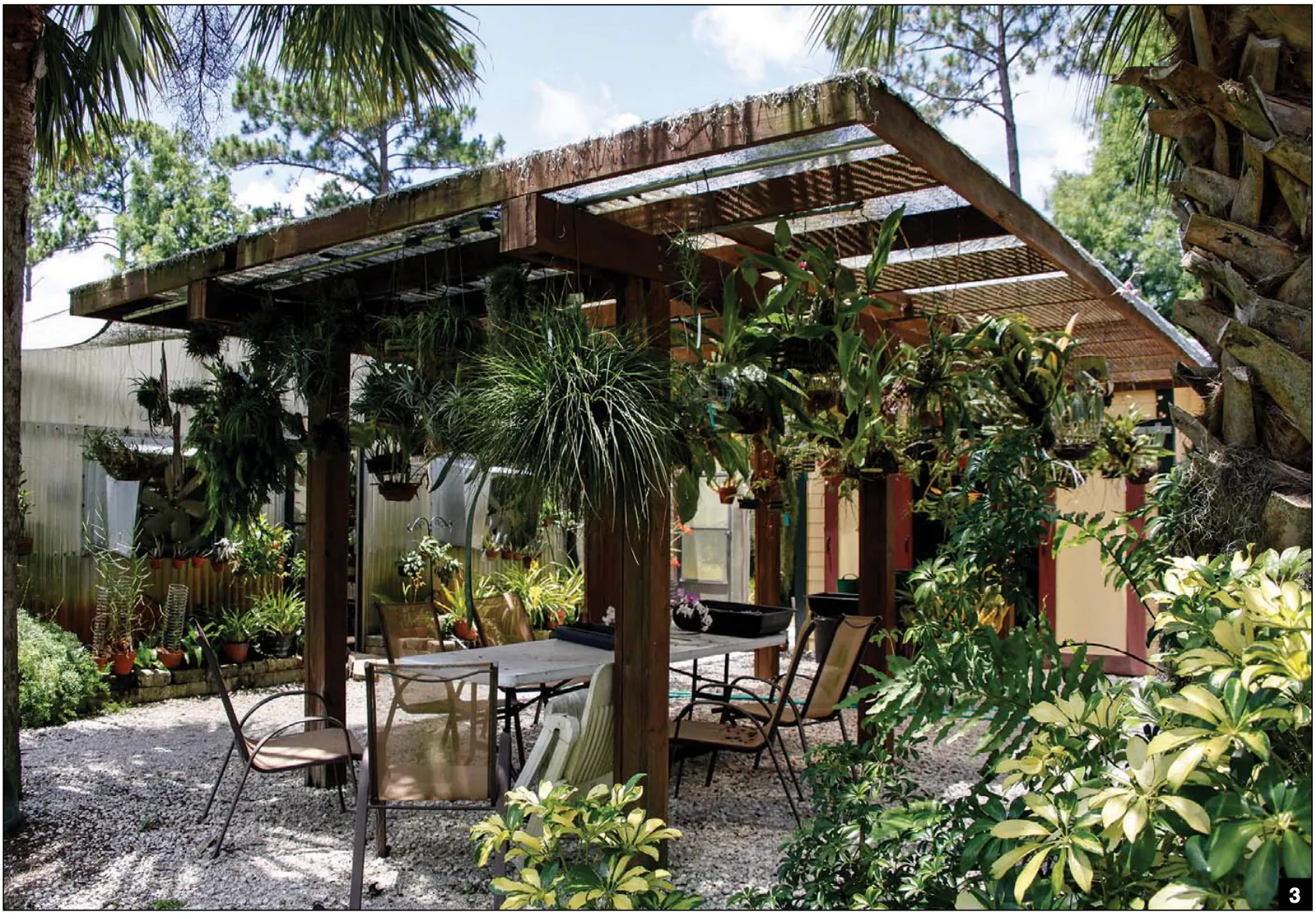
[2] Grow your orchids on a screened porch, under a pergola, in a shade house, on a fence, under a tree, hanging from shepherd hooks or anywhere where they will receive copious quantities of fresh air along with the proper light and water during the growing season.
Wafting breezes offer many benefits to your orchids:
• Fresh moving air improves gas exchange through leaf pores and around the rhizomes and roots, a process that is required for the plant’s metabolic processes.
• Fresh moving air cools the leaves during warm weather when high light and high temperatures could otherwise cause the plant to overheat and restrict its metabolic processes and possibly result in leaf sunburn.
• Fresh moving air helps distribute warm and cold air, so extremes in air temperature will not harm the vegetation.
• Fresh moving air helps dry excess moisture from the leaves, so bacteria and fungi will not proliferate.
[3] This pergola has a polypropylene roof and shadecloth covering so the amount of rainfall and light can be controlled. Stanhopeas grow under the shadier center of the structure with laelias and laeliocattleyas that need higher light growing on the bright edges, along with a smattering of tillandsias
Of course, air movement and humidity must be in balance. In a low-humidity environment, excess air movement will cause more evaporation and possibly result in dehydration. In a high-humidity environment, air movement is a must to prevent orchid disease problems.
During the cooler months, your orchids are probably in their winter homes inside. You can group your plants on humidity trays filled with pebbles to hold extra water after watering and provide some humidity around the plants. A fan blowing a gentle breeze around your plants is good. When the temperature is right, you can open a window by your plants and let them get a taste of the fresh air they crave.
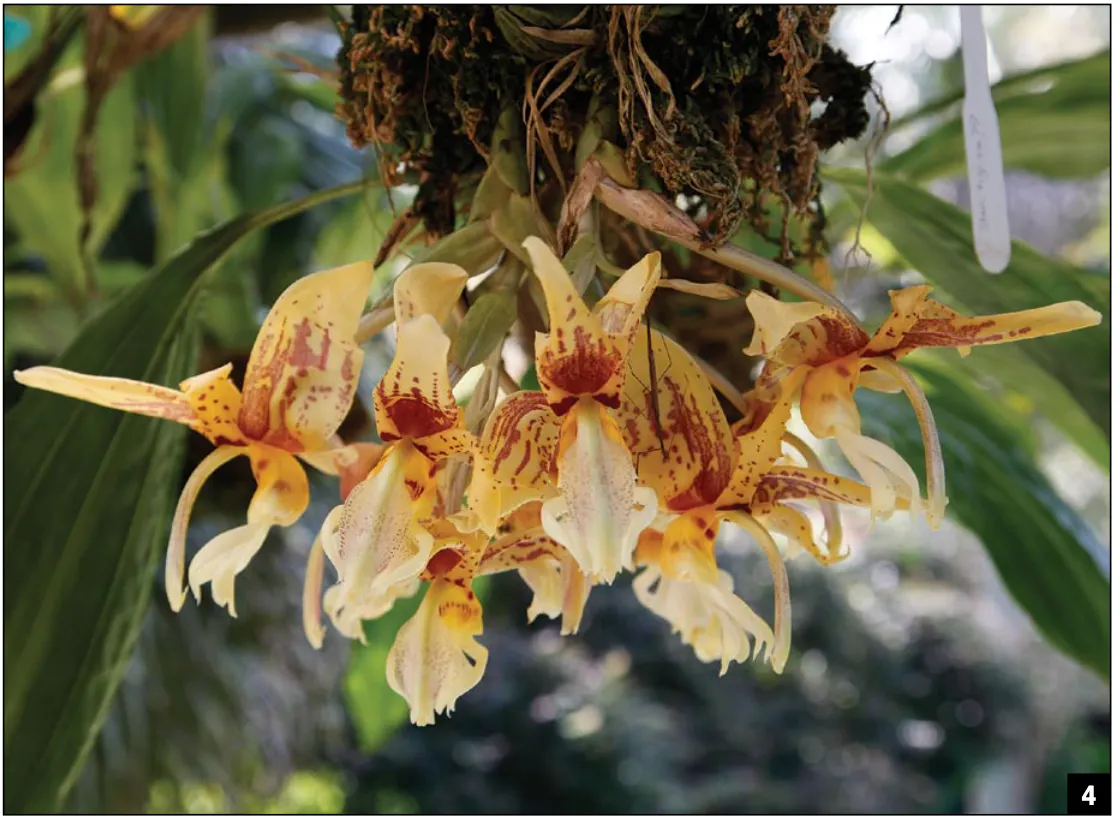
[4] The stanhopeas in particular enjoy fresh air. When growing them in the greenhouse they were prone to leaf spotting and the plants just did not look happy. Some members in my orchid club had much better looking plants than I and they were growing them outside under trees, so the stanhopeas were all moved under the pergola. This Stanhopea tigrina showed its appreciation that year. The stick bug seemed to like it too!
When warm weather returns, try to find a location outdoors where your orchids can get loads of fresh air. A screened porch is great, particularly for Phalaenopsis that want shadier conditions and a covered roof where water will not accumulate in the crown of the plant, causing rot. Hanging your orchids under a tree where they will receive dappled light and fresh breezes 24 hours a day will result in an incredible summer growth surge, particularly if you ramp up your watering and fertilizing schedules to match the increased plant vigor.
Proper air movement is just as important to your orchid as providing the proper amount of water and light to your plant. It is also the least appreciated aspect of orchid growing. If you struggle with fungal and bacterial problems on your plants, you can apply chemicals to treat the symptoms. However, in many instances, proper air movement would have prevented the problem from arising in the first place.
— Sue Bottom started growing orchids in Houston in the mid-1990s after her husband Terry built her first greenhouse. They settled into St. Augustine, Florida, Sue with her orchids and Terry with his camera and are active in the St. Augustine Orchid Society, maintaining the society’s website and publishing its monthly newsletter. Sue is also a member of the AOS Editorial Board (sbottom15@hotmail.com).